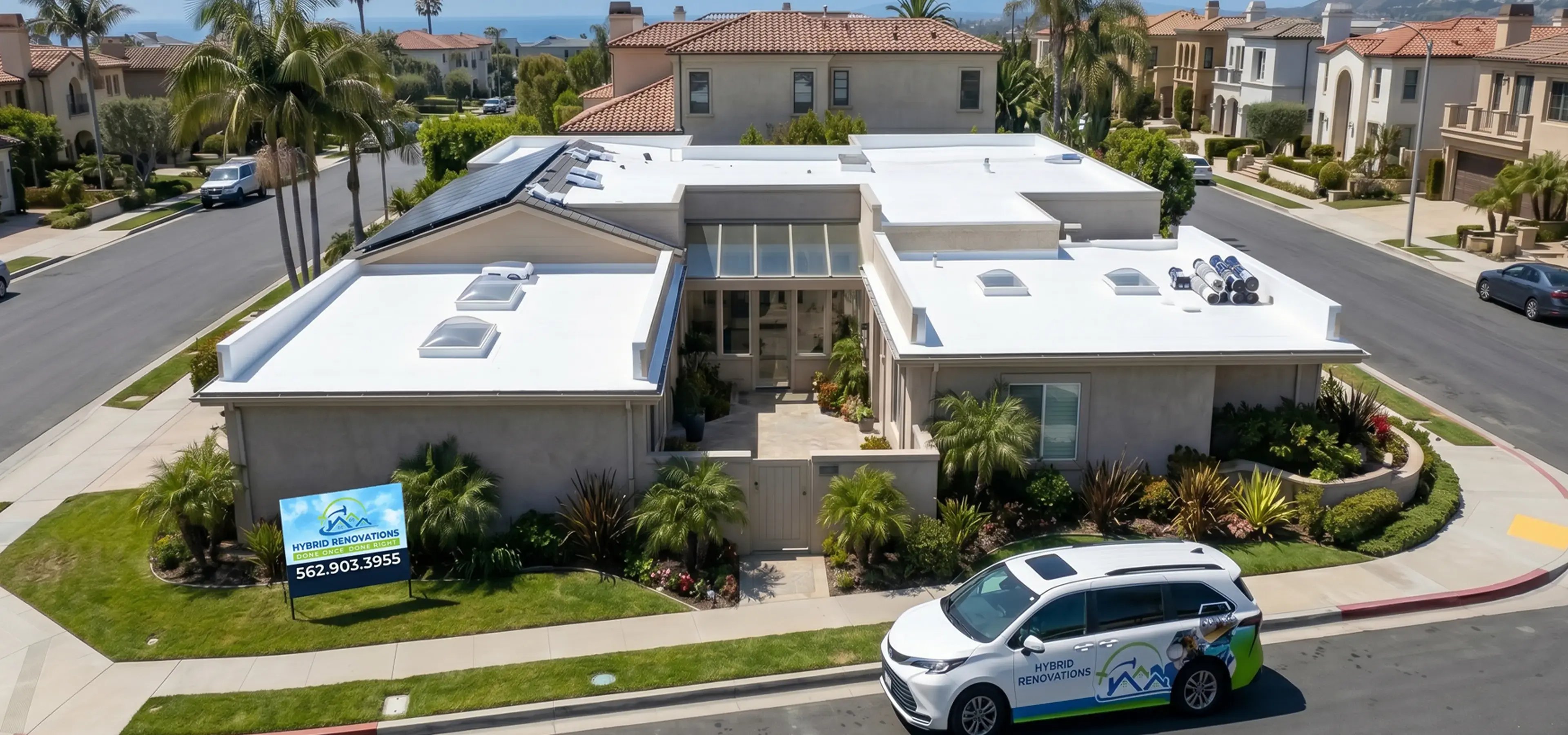
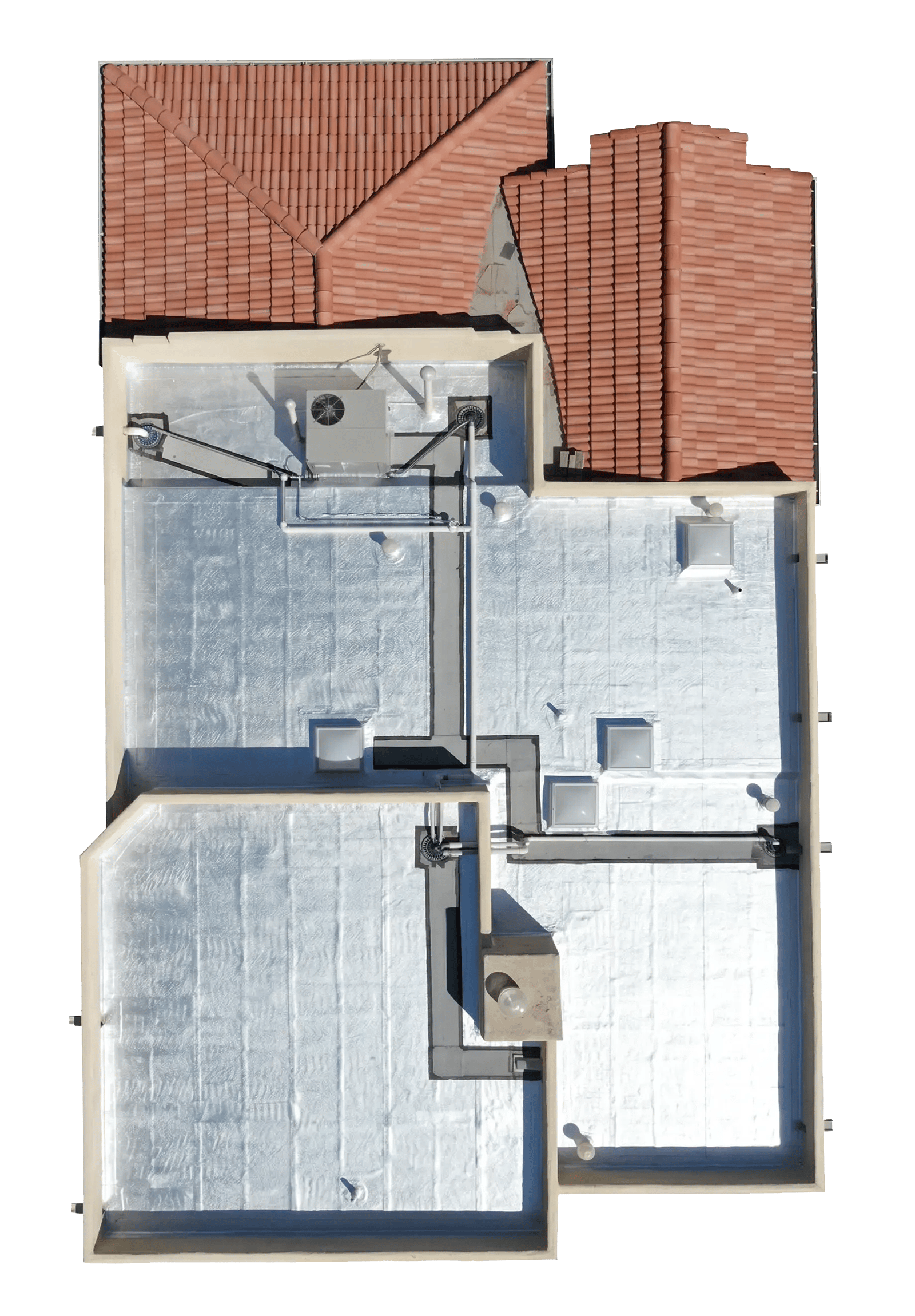
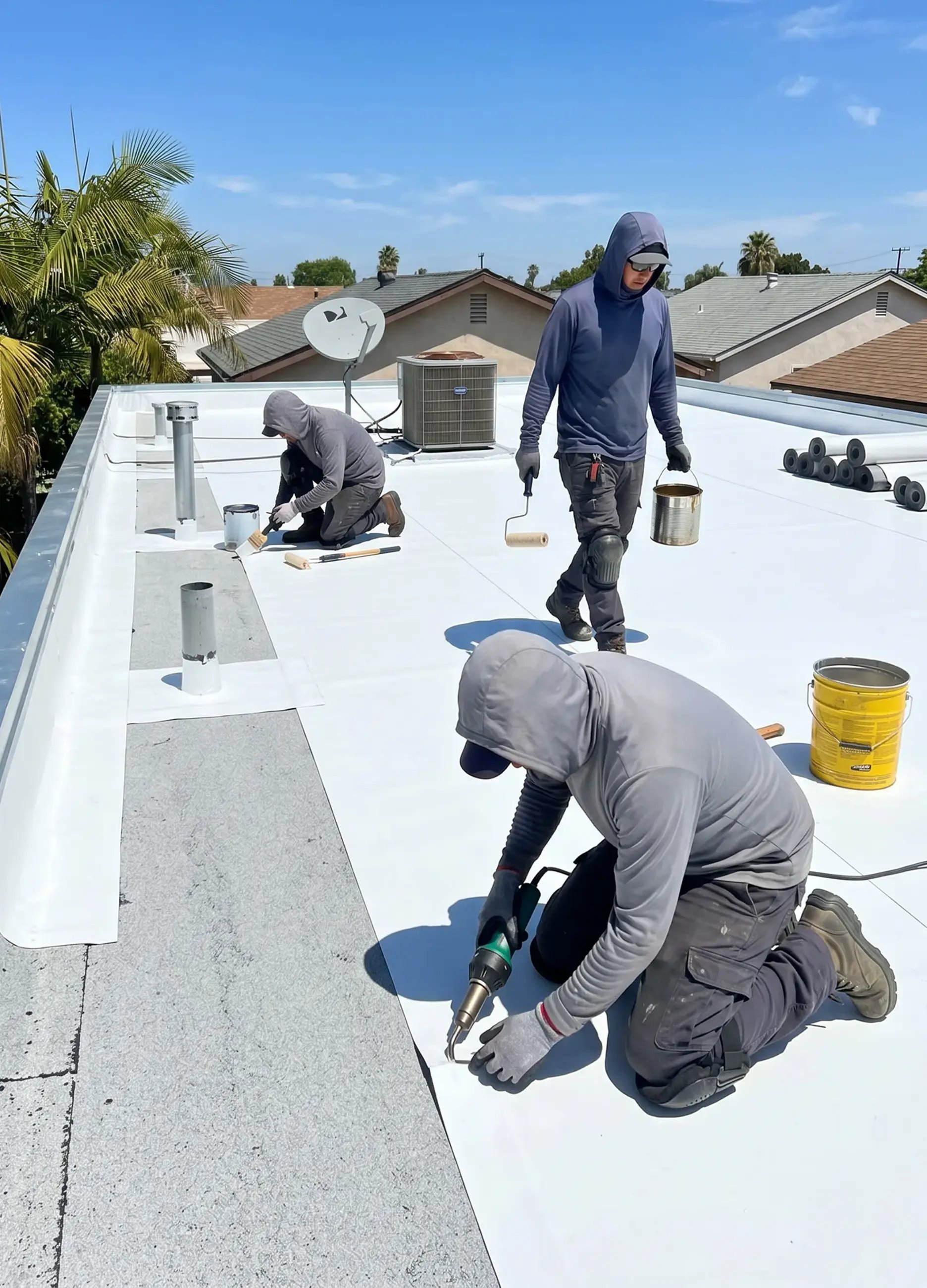
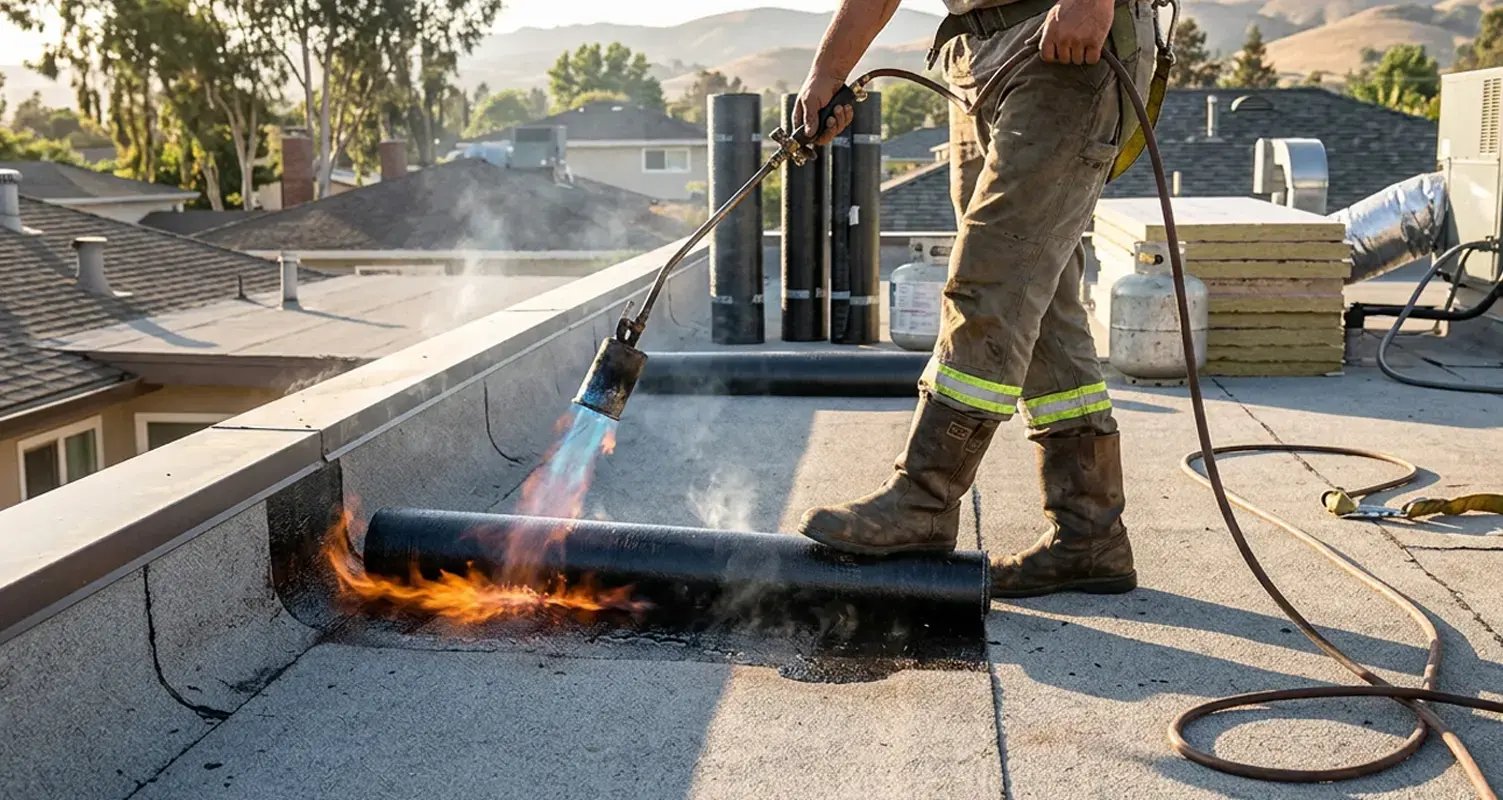
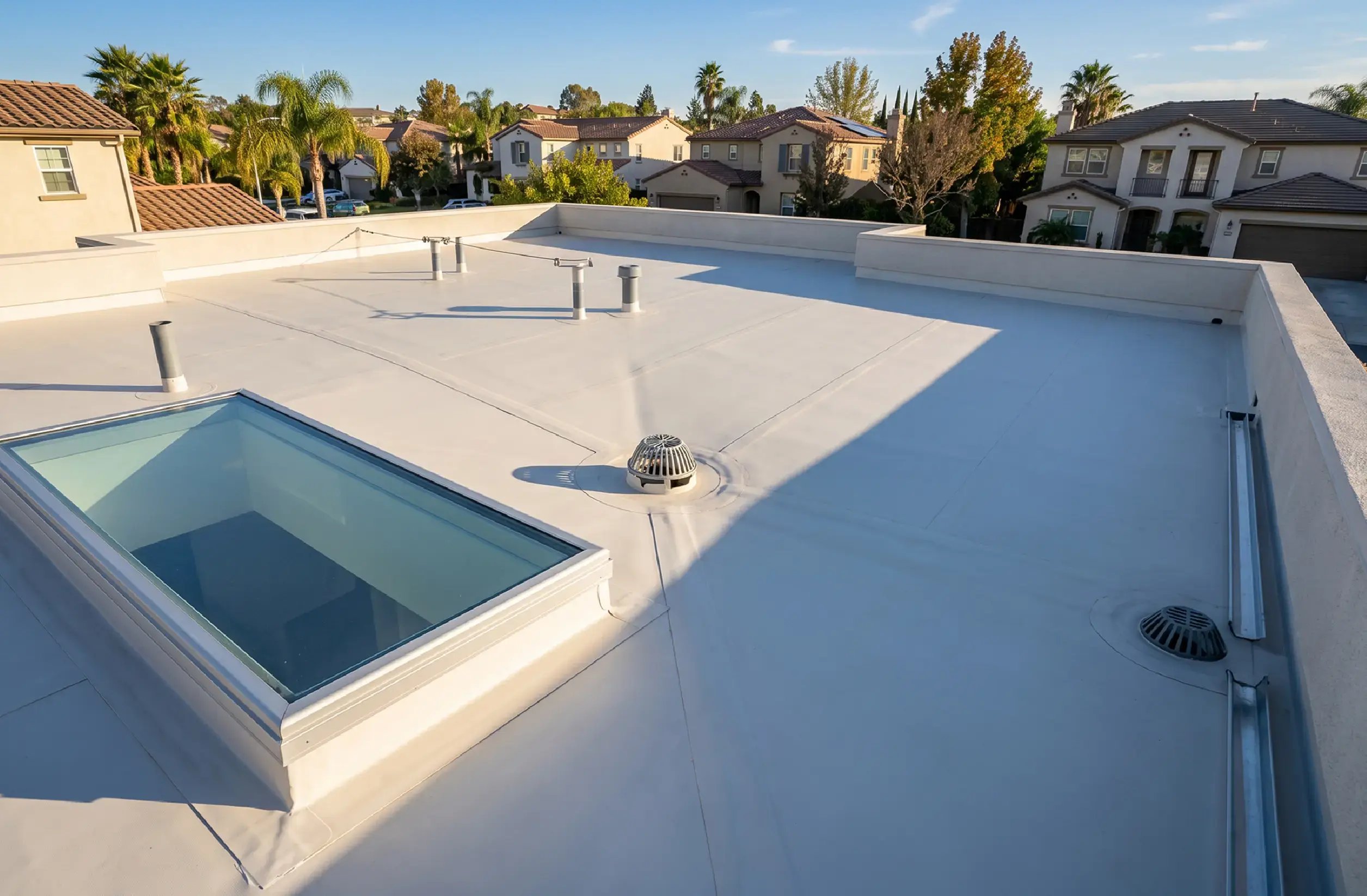
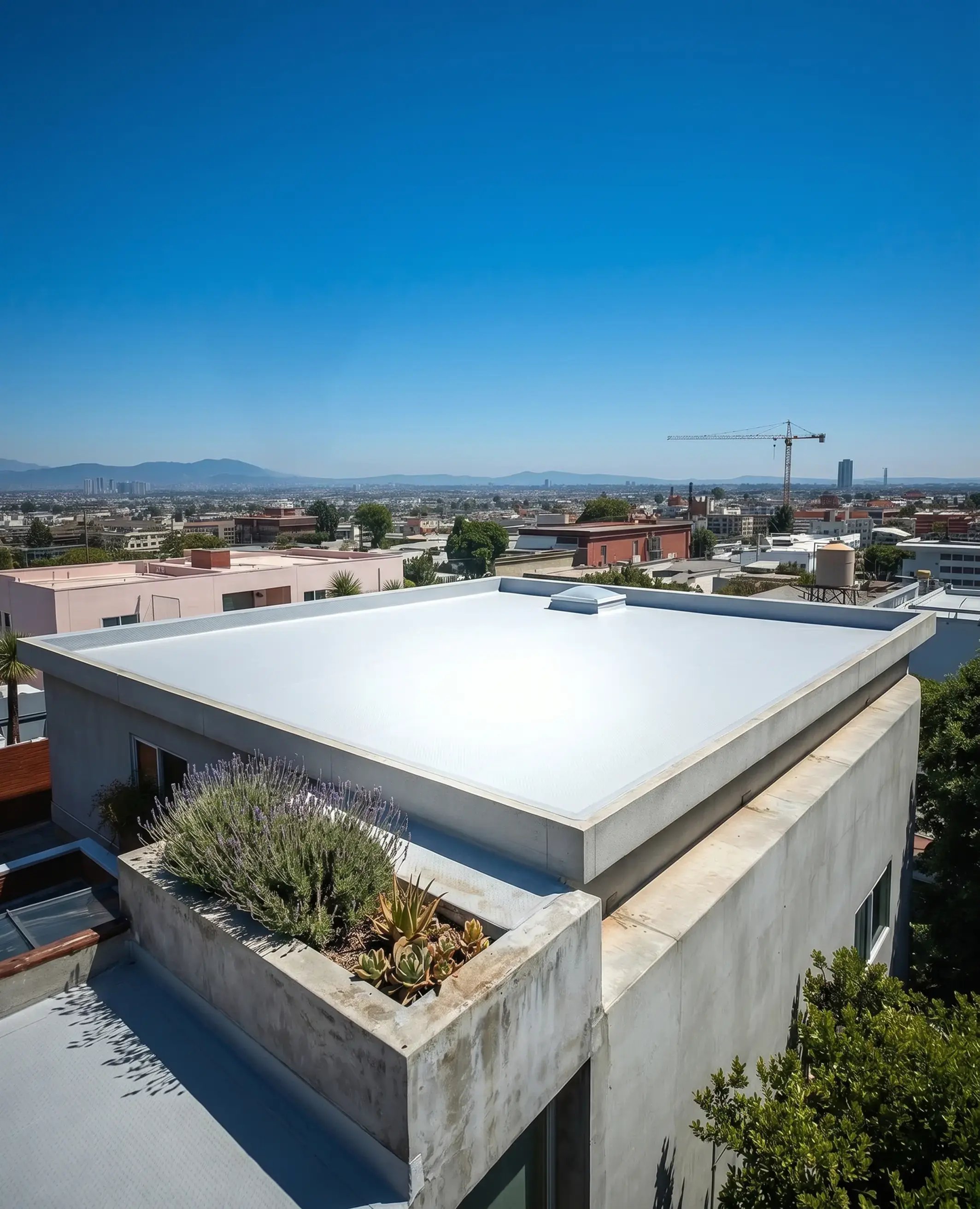
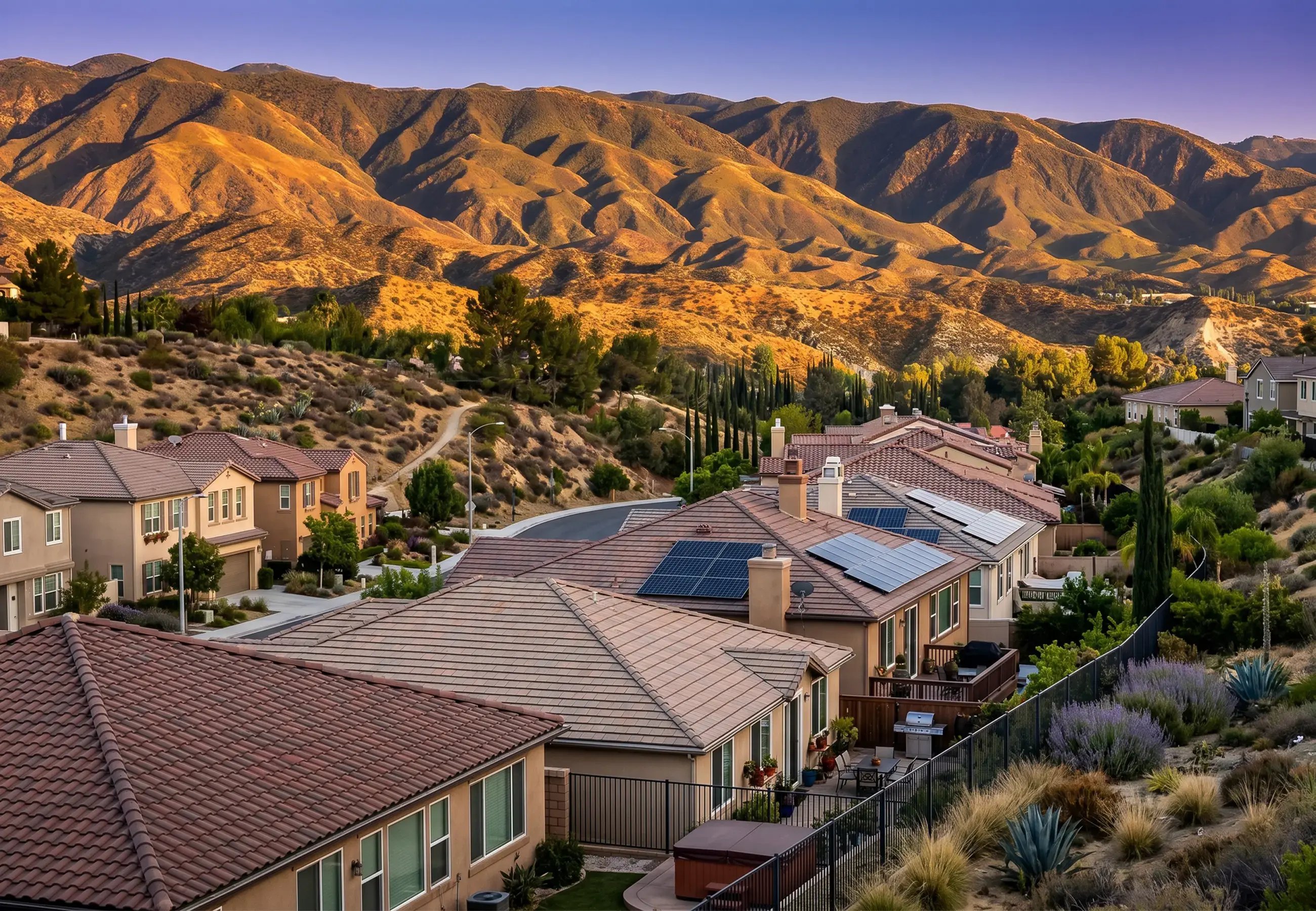
Flat and low-slope roofs top much of Los Angeles and Orange County, from mid-century moderns to new ADUs. A flat roof does not fail because it is flat. It fails when the seams, flashings, and drainage were never built right. Here is what we build into every one.
We take on the flat roof projects that need to be done once and done right.
Flat roof replacement
Full tear-off to the deck, then a complete new system that ends a leak history for good.
New flat roof installation
New low-slope roofs for room additions, garage conversions, ADUs, and patio structures.
Re-roofs over hot mop & gravel
We tear off aging tar-and-gravel and built-up roofs and upgrade them to a modern membrane system.
Major repairs
Large-section membrane replacement, parapet and flashing rebuilds, slope and drainage correction, and dry rot repair.
Minor patches and repairs
Not our work.
If a small patch is all you need, we will tell you honestly.
The Systems We Install
Four Proven Flat Roof Systems, Matched to Your Home and Budget
There is no single right flat roof. There is a right flat roof for your home, your plans, and your budget. Here is where each one lands.
Torch-DownSelf-AdheredTPOPVC
Best valueLongest life
Ordered left to right, best value to longest life.
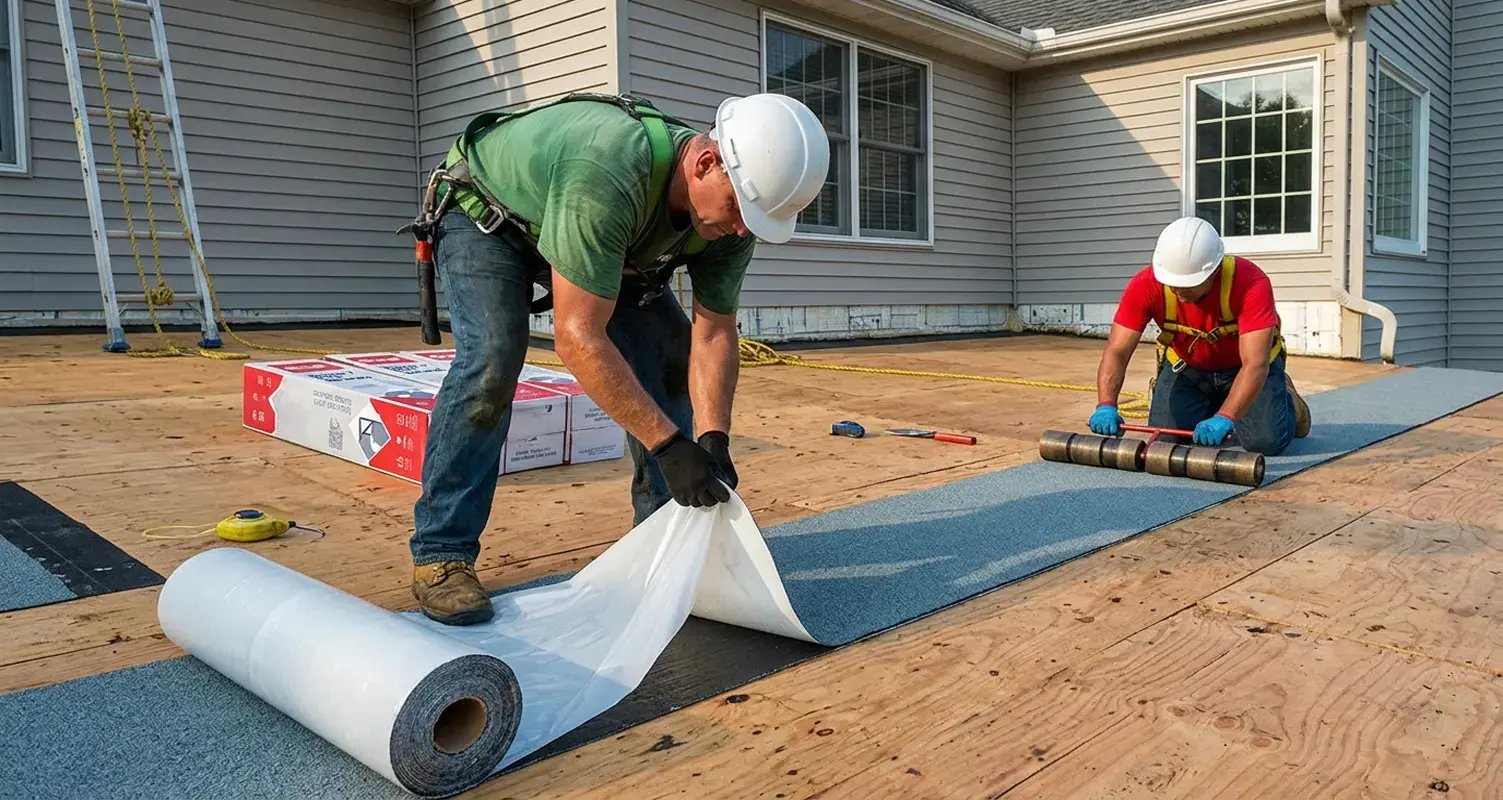
Modified bitumen · torch-applied
Torch-Down
Polymer-modified asphalt fused with heat into a thick, puncture-resistant roof with a granulated, cool-rated cap. The Southern California workhorse.
Lifespan
15 to 20 yr
Relative cost
$$$$Relative cost 1 of 4
Best forProven value for most homes, additions, and garages.
Modified bitumen · torch-free
Self-Adhered
The same multi-layer protection, installed with high-strength peel-and-stick sheets and no open flame.
Lifespan
15 to 20 yr
Relative cost
$$$$Relative cost 1 of 4
Best forOccupied homes and tight lots where flame-free installation is the smarter call.
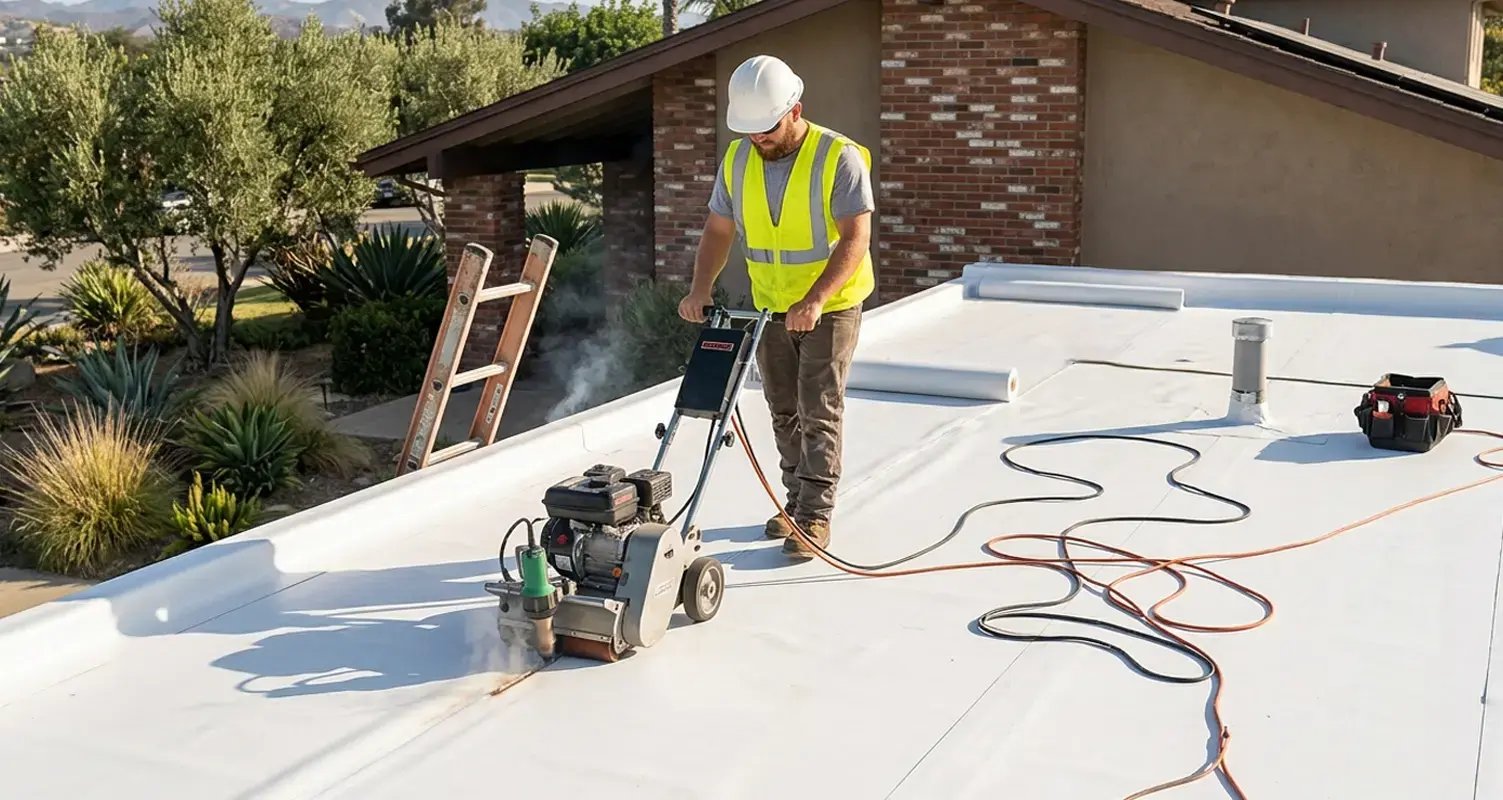
Single-ply · heat-welded
TPO
A bright white reflective membrane with hot-air welded seams, a weld as strong as the sheet itself. The strongest energy story here.
Lifespan
20 to 30 yr
Relative cost
$$$$Relative cost 2 of 4
Best forEnergy savings, a modern look, and a long service life.
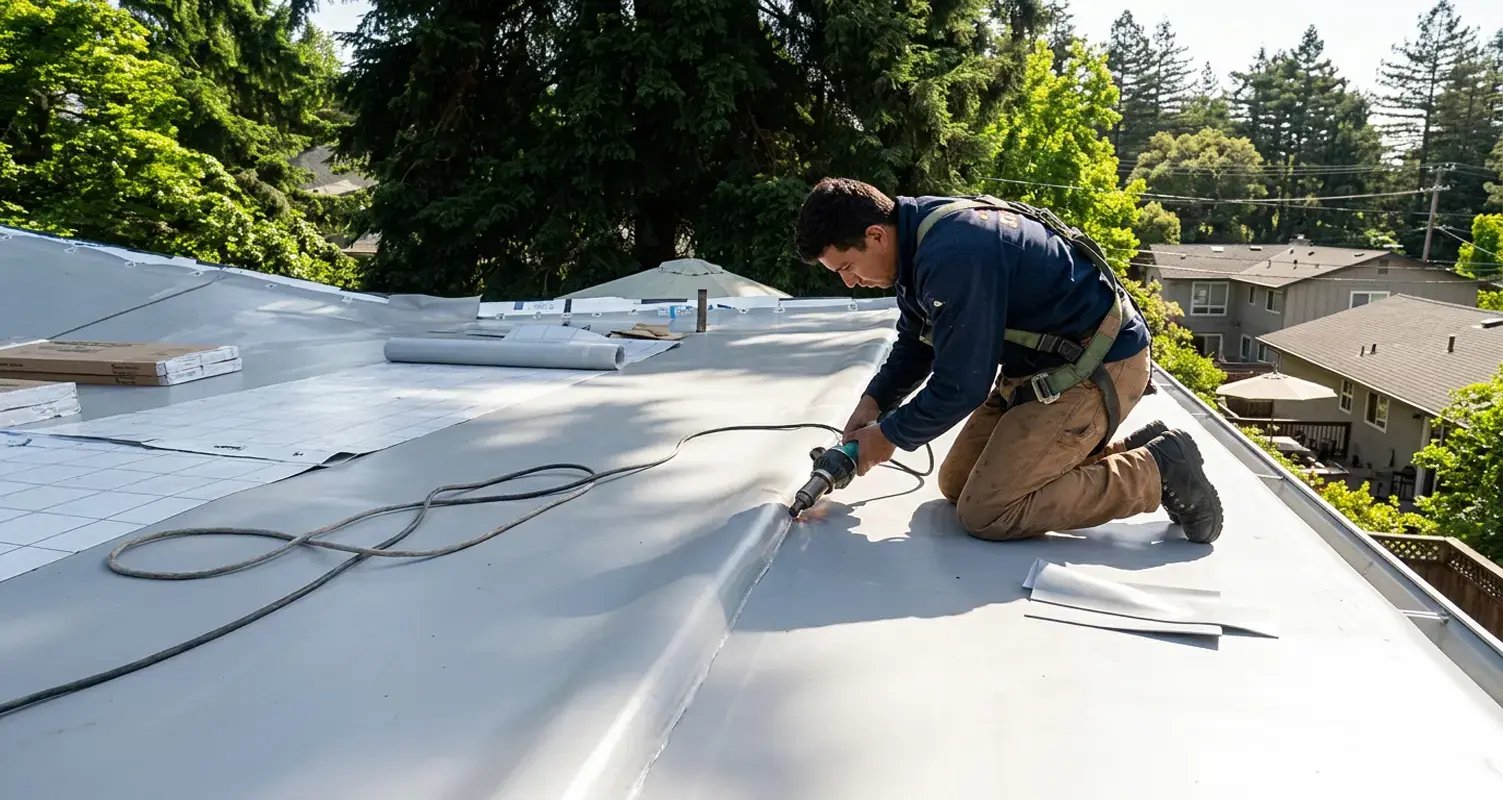
Single-ply · heat-welded
PVC
The top of the single-ply range. Welded seams and a tougher formulation give it the longest life and the best tolerance of standing water.
Lifespan
25 to 30+ yr
Relative cost
$$$$Relative cost 3 of 4
Best forThe homeowner who wants the last flat roof they will buy.
Still have a tar-and-gravel or hot mop roof? Those systems served their era. When yours reaches the end, we replace it with one of the modern systems above rather than patching the past.
Why Ours Don't Leak
Flat roofs always leak.Not when they are built like this.
Almost every flat roof leak traces back to one of six details. We obsess over all six on every job, starting with the one that fails first.
Number one leak point
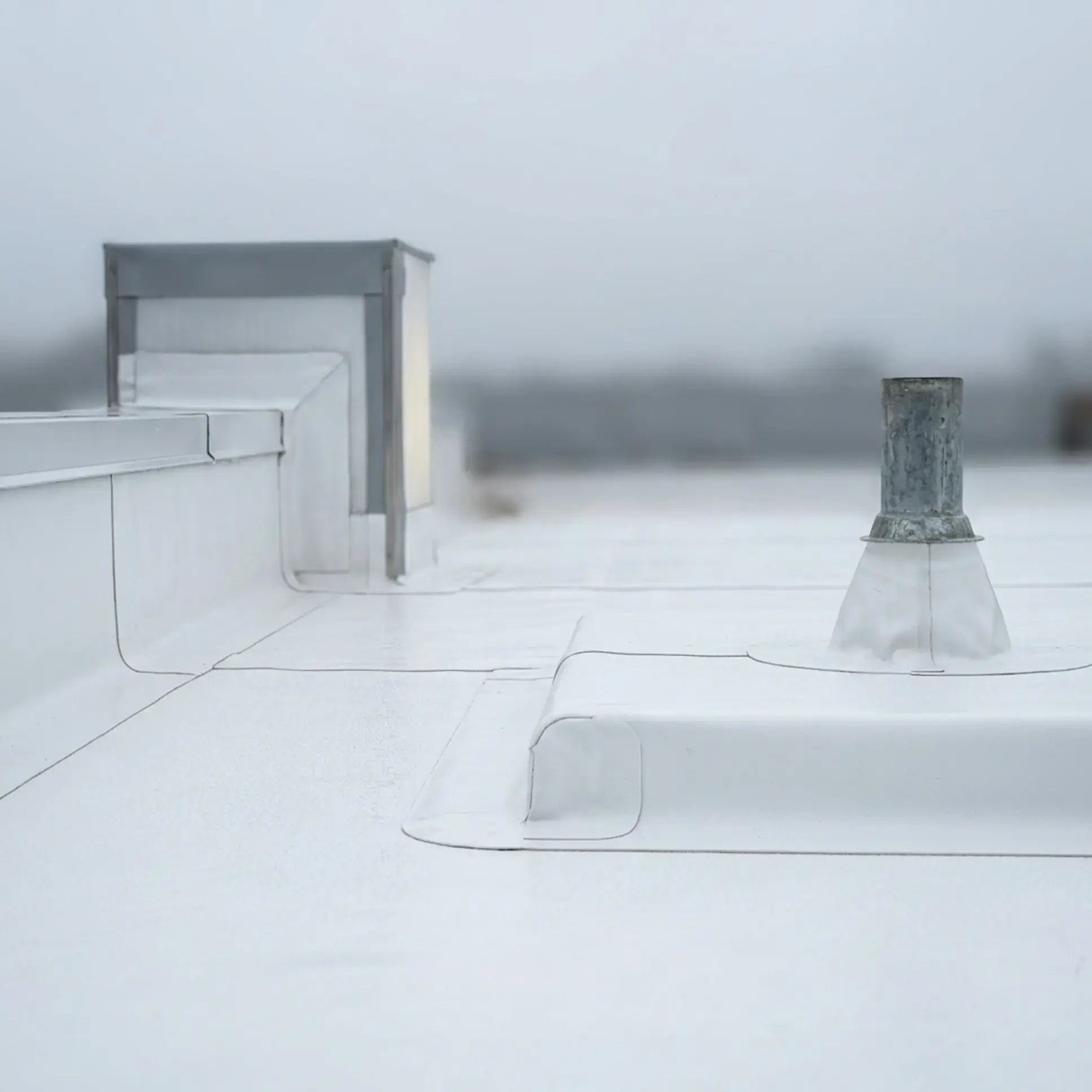
Flashings at every wall, parapet, and pipe
Metal and membrane flashings turn corners, climb parapet walls, and seal every penetration, the places water probes first. This is where cheap flat roofs fail, so it is where we spend the most care.
01
A sound, dry deck
Every system starts on inspected wood. Rot and soft sections are replaced before anything goes over them.
02
Slope you can't see, drainage you can
Flat roofs are never truly flat. We build in a minimum quarter inch per foot of fall with tapered insulation so water always has somewhere to go.
03
One continuous membrane
Fused with heat, welded with hot air, or bonded ply over ply, the field becomes a single watertight sheet.
04
Seams that are the strong point
Seams are where cheap flat roofs die. Ours are fused or welded, not just glued and hoped for.
06
Edges, scuppers, and overflows
Finished edge metal, clear scuppers, and code-required overflow drainage mean even a blocked drain in a downpour has a backup plan.
The 48-Hour Rule
A Flat Roof Should Be Dry Within 48 Hours
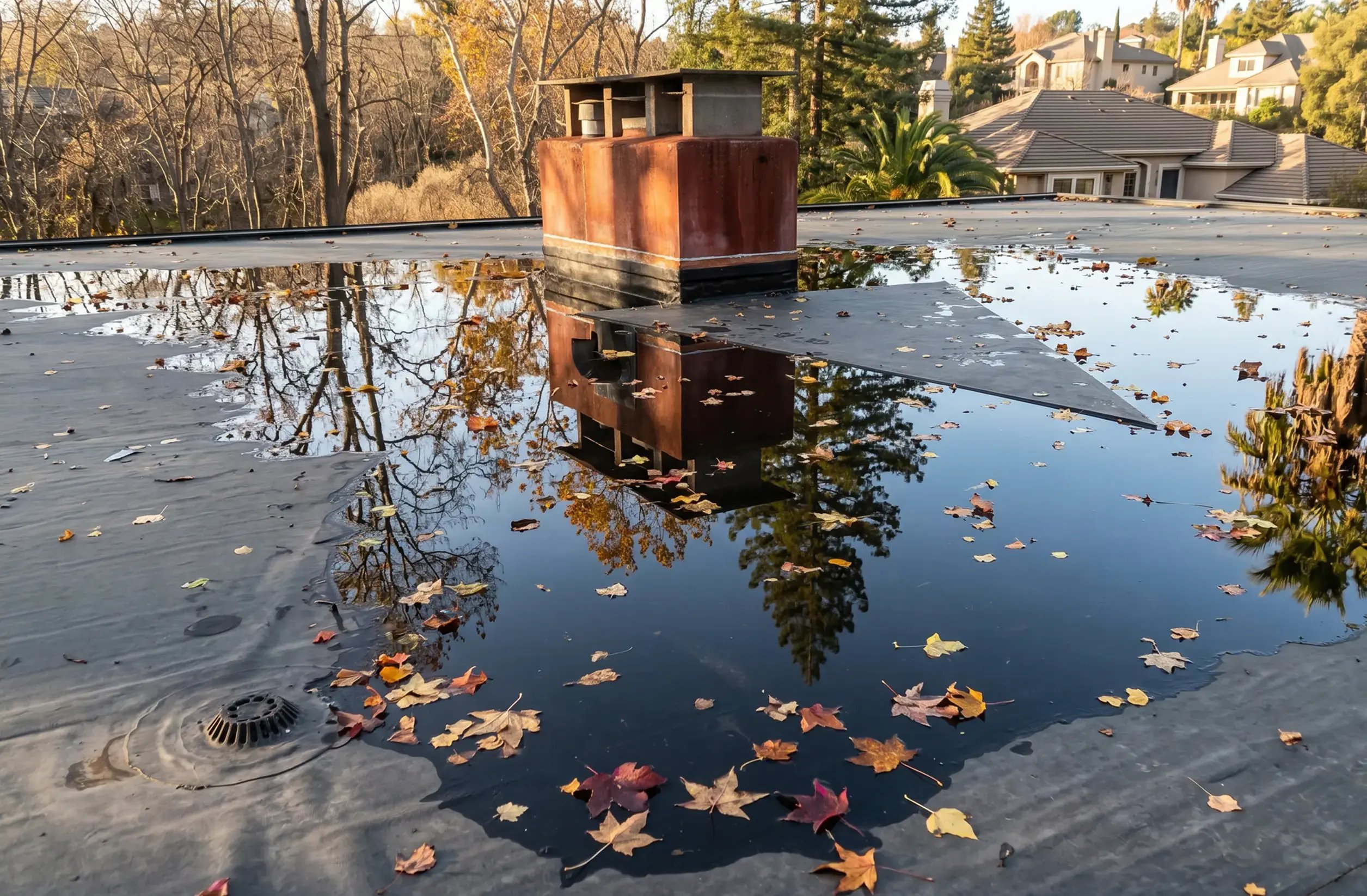
After a storm, water should drain off a flat roof within 48 hours. Water that lingers has a name: ponding. Here is a roof that holds it beside a roof that sheds it.
Past 48 hoursA roof that pondsNo slope. Water pools in the low spot, gets heavier, deepens, and climbs toward the flashing.
Dry in 48 hrsA roof that drainsBuilt-in slope. Every storm runs to a drain or scupper before it can sit and do harm.
48 HRSTHE LINE
Why ponding destroys a roof
It voids your warranty — Most membrane warranties exclude standing-water damage.
It ages the membrane fast — Standing water magnifies UV and softens seams years early.
It gets heavier and deeper — Weight deflects the deck; the low spot then holds even more.
It finds a way in — Rise above the flashing and water is in the ceiling below.
How we build it to drain
We build in the slope — Tapered insulation creates a real quarter inch per foot of fall.
We steer the water — Crickets and saddles divert around chimneys and penetrations.
We plan for the worst storm — Code-required overflow drainage backs up the primary drains.
We check it before we leave — We confirm every low point drains before we call it done.
Most flat roof problems are really drainage problems. Build the drainage right, and the leaks never start.
Why Flat
Six Reasons a Flat Roof Earns Its Keep
A flat roof is not a compromise. Built right, it turns the top of your home into usable space, the ideal solar platform, and a cool, low-profile roofline that fits modern Southern California living.
The headline benefit
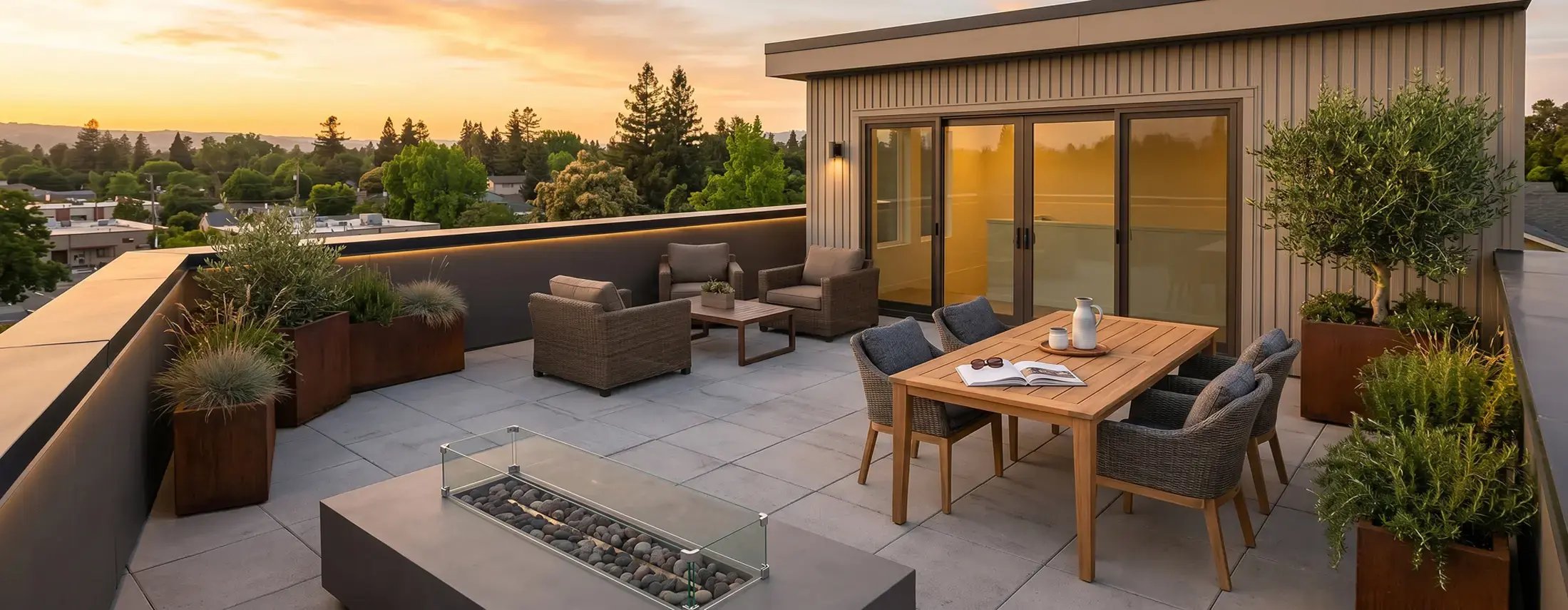
A whole new floor you never lose to the yard
A properly engineered flat roof can carry a deck, terrace, or lounge, usable square footage with structural capacity designed in from the start.
02
The best solar platform
Tilt racking angles panels to the ideal pitch no matter which way your home faces.
03
Meets Title 24 (SRI 75)
A white, reflective cool-roof membrane meets California's strictest low-slope standard.
04
A place for the hardware
HVAC units, vents, and lines sit up top, out of your yard and out of sight, with easy access.
05
A clean, modern low profile
Flat rooflines fit modern Southern California architecture and keep height down, which can matter for ADUs.
06
Built for the footprint
Additions, garages, and ADUs skip the complex hip-and-valley framing a pitched roof needs.
75SRI target
Cool Roof & Title 24
The Highest Cool-Roof Bar in California
Your flat roof has to reflect and release more heat than any pitched roof, in all 16 climate zones. We build to it and file the proof.
0.63Solar reflectanceHow much sunlight the roof bounces back instead of soaking up.
0.75Thermal emittanceHow fast it releases heat instead of pushing it into your home.
Flat / low-slopeSRI 75All 16 zones
vs
PitchedSRI 16Some zones
A flat roof reflects far more heat, statewide. A white cool-roof membrane clears it easily.
CRRC-rated membrane
Independently rated and listed in the Cool Roof Rating Council directory, the proof your city wants.
Matched to your zone
Los Angeles and Orange County span several zones. We install to the standard for your area.
We file the CF1R
The Title 24 certificate of compliance goes in with your permit. You do not chase a form.
We handle exemptions
Area under solar panels and added insulation options, built into the plan the right way.
Built for Solar
A Flat Roof Lets You Aim Solar Anywhere the Sun Is
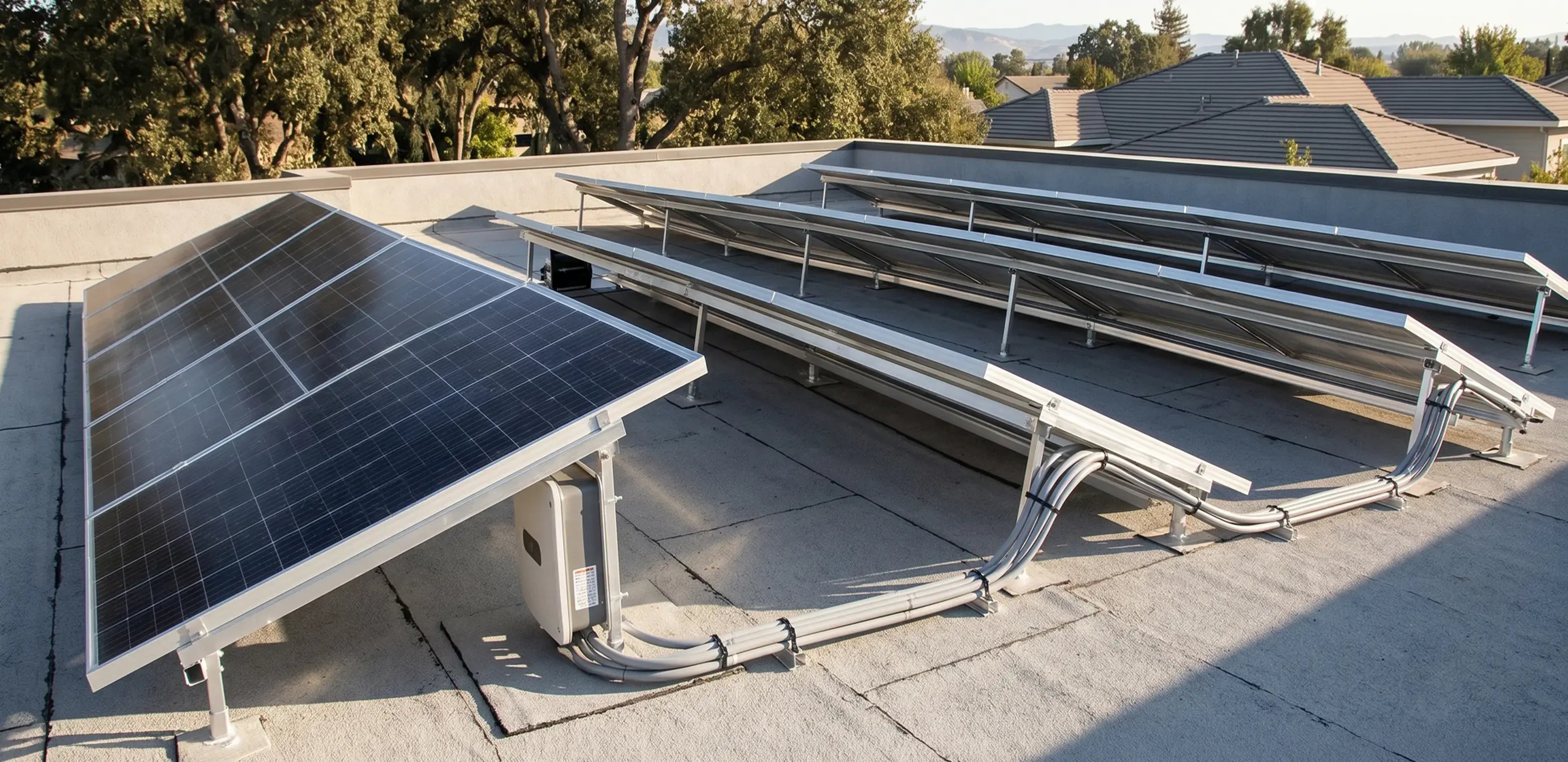
On a pitched roof, panels are stuck with whatever direction the slope faces. On a flat roof, the rack sets the angle, so panels tilt to the ideal pitch and face true south no matter how your home sits. That freedom, plus mounting that usually never drills the roof, makes a flat roof one of the best solar platforms in Southern California.
Solar on a flat roof with tilt racking
Flat roof
Tilt racking sets the angle and aims panels true south. Most arrays ballast onto the roof with no holes drilled, so the membrane and its warranty stay intact.
Pitched roof
Panels follow the existing slope and direction. Every mount is drilled and sealed through the roofing, the most common source of roof leaks.
10-15% more
The output you would leave on the table. Panels aimed at the ideal tilt and true south often produce 10 to 15 percent more than panels locked to a slope that faces the wrong way. On a flat roof, the rack decides the angle, not your rooflines.
A light, reflective cool-roof membrane can even give bifacial panels a small output bump.
Aim, don't settle
Tilt racking sets the perfect pitch and points panels true south, whatever way your house faces.
Weighted, not drilled
Most flat-roof arrays ballast down with no penetrations, so your roof and its warranty stay intact.
Low, hidden, easy to reach
Panels lie low and out of sight from the street, the whole roof stays usable, and walk-on access makes cleaning simple.
Going solar soon? Start with a fresh membrane so the roof outlasts the panels and you never pay to pull the array for a re-roof. If your structure or wind exposure calls for attached mounts, we flash every penetration to keep it watertight.
Let's Clear This Up
What You've Heard About Flat Roofs,and What's Actually True
Flat roofs have a reputation built on old materials and bad installs. Modern low-slope systems are a different animal. Here are the six myths we hear most, and what is actually true.
The truth
Flat roofs do not leak because they are flat. They leak when they are installed poorly. On a low-slope roof, water is managed by the membrane, the seams, the flashings, and the drainage, not by a steep pitch. Done right, with heat-welded or fully fused seams, flashing at every wall and penetration, and a built-in slope of about a quarter inch per foot, a modern flat roof stays dry for decades. Almost every leak we are called to fix traces back to a bad seam, a missed flashing detail, or standing water, all of which come down to workmanship.
The truth
It should not be. Code calls for a minimum slope of about a quarter inch per foot, and we build that slope in with tapered insulation and crickets so water moves toward the drains and scuppers instead of sitting. A roof that actually holds water is a problem to fix, not a design. The goal is simple: no standing water 48 hours after it rains.
The truth
Lifespan depends on the system and the install, not the shape. Torch-down modified bitumen commonly lasts 15 to 20 years, TPO runs about 20 to 30, and PVC can reach 25 to 30 or more, especially where ponding is a risk. The old hot-mopped tar-and-gravel roofs earned flat roofing its short-lived reputation. The systems we install are not those roofs.
The truth
Flat and pitched roofs fail in different places for different reasons, and they are built with different materials and methods. A low-slope membrane lives or dies on seam welding, flashing detail, and drainage design, which is specialized work. A crew that mostly installs shingles is not automatically set up to weld a membrane or build proper slope. It is worth asking who is actually doing the work.
The truth
The opposite is true when it is built to code. California's Title 24 energy standard holds low-slope roofs to the strictest cool-roof requirement in the state, so a compliant flat roof uses a reflective membrane that pushes summer heat back off your home. A white cool-roof surface can run far cooler than a dark one in peak sun, which eases the load on your air conditioner.
The truth
Flat and low-slope roofs are common on homes across Los Angeles and Orange County, from mid-century houses to modern builds, additions, garages, and ADUs. A low profile keeps the height down where local limits matter, turns the roof into usable space or a solar platform, and fits the clean lines of modern Southern California architecture. This is residential work, and it is a large part of what we do.
Have a concern that is not on this list? Ask us at your estimate. You will get a straight answer, including the cases where a flat roof is not the right choice.
In a fire zone, every flat section of your home has to earn a Class A rating on its own, the same as the main roof. We install fire-rated membrane assemblies that carry the highest fire classification there is. Class A is not one product, it is the whole system, and the details at the seams, edges, and penetrations are what keep embers out.
What we build in
Class A fire-rated membrane assembly
Fire-rated base sheet and cap sheet
Self-adhered or cold-applied install, no open-flame torch
Sealed flashing at every wall, edge, and penetration
Ember-resistant vents and edge details
In a Fire Hazard Severity Zone? Many insurers now ask for Class A roof documentation before they will cover a home, and California expanded its fire hazard maps in 2024 and 2025. We build every flat section to the state's wildfire code and hand you the paperwork.
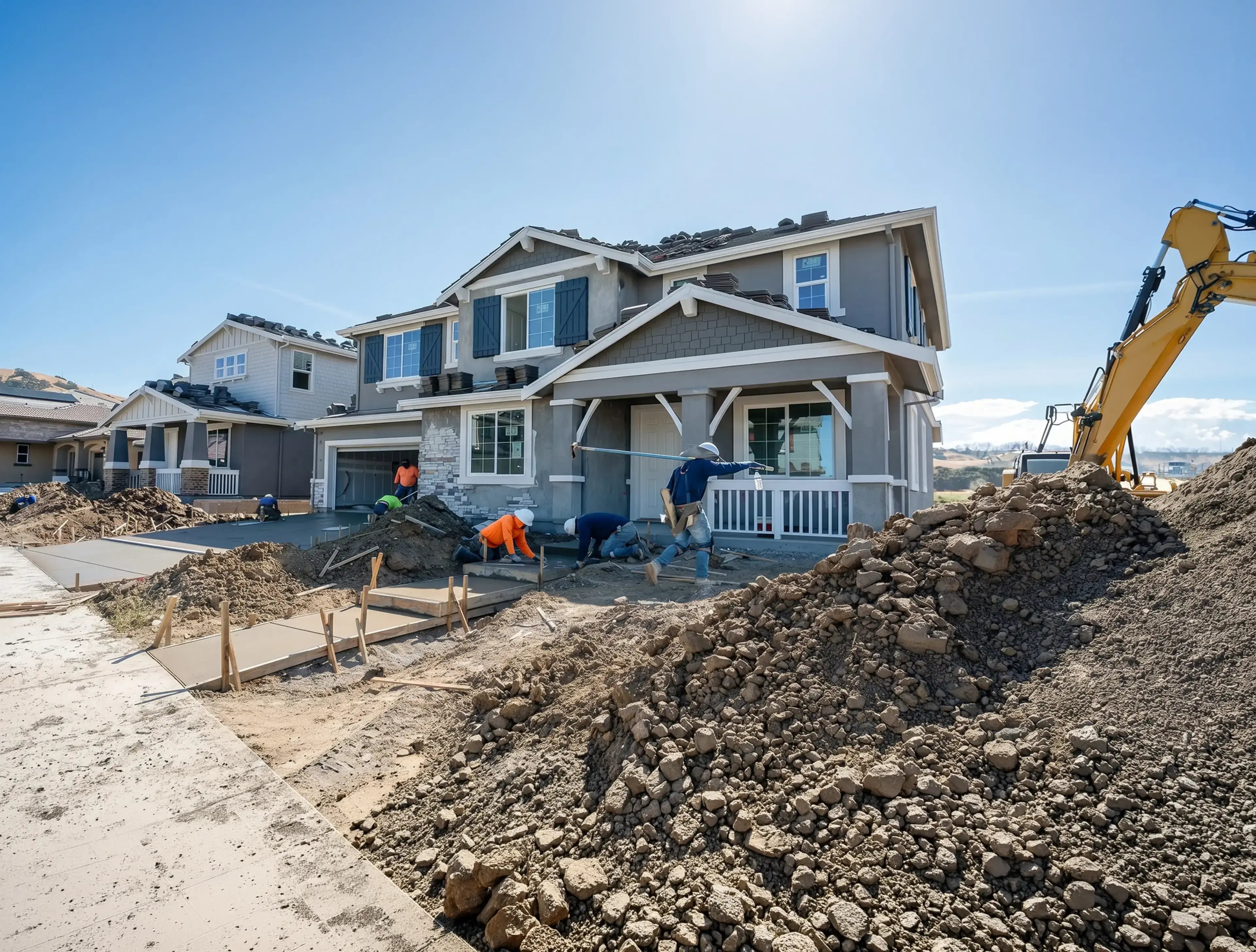
A flat roof lasts because of the sequence behind it, not just the membrane on top. Here is exactly how we tear off and install or re-roof a low-slope roof, from protecting your home on day one to the final walkthrough. Every step is built around a dry deck, built-in slope, and welded, sealed details that keep water moving to the drains instead of sitting on the roof.
We cover your landscaping, walkways, and AC units, set up debris control, and run a magnetic sweep for stray fasteners at the end of each day. Your driveway and yard stay usable while we work.
02
Step 02
We tear off the old roof
We strip the roof down to the deck and haul the old membrane, flashings, and any failed layers away. Roofing over damaged or wet material only traps moisture, so going all the way down lets us see the deck's real condition instead of building a new roof over hidden problems.
03
Step 03
We check and prep the deck
We inspect every panel and replace any sheathing that is rotted, soft, or water-damaged, so your flat roof starts on a solid, dry base. A low-slope roof is only as good as what it sits on, so we confirm the structure is sound and tell you honestly if anything needs attention before we go further.
04
Step 04
We build in the slope and drainage
This is the step that keeps a flat roof from becoming a pond. We build positive slope with tapered insulation and crickets so water is directed to the drains, scuppers, and edges instead of standing on the surface. The target is simple and code-backed: no standing water 48 hours after it rains, something a true flat roof cannot fix on its own.
05
Step 05
We install the membrane and weld the seams
Next comes the waterproofing. We roll out your chosen membrane, torch-down, TPO, or PVC, and heat-weld or fully fuse every seam so the surface performs as one continuous sheet. A welded seam is as strong as the membrane itself, which is why a properly installed flat roof does not leak down the field.
06
Step 06
We flash the details, then clean up and walk it with you
We seal the flashing at every wall, edge, and penetration, the small transitions where most flat roofs actually leak, and set the edge metal, scuppers, and overflow. Then we run a final magnetic sweep, haul away every scrap, and walk the finished roof with you before we call it done, along with your warranty paperwork.
Permits & Inspections
We Handle the Permits, the Code, and the Inspections
A flat roof replacement in Los Angeles or Orange County has to be permitted, built to California code, and inspected. We take all of that off your plate. You do not chase the city, fill out forms, or wait around for inspectors. We pull the permit, build to code, coordinate every inspection, and hand you a clean, signed-off record when the job is done.
We pull the permit
We file for and pull the roofing permit with your local building department, whether your home is in the City of Los Angeles, unincorporated LA County, or an Orange County city, so the work is on record and done by the book.
We build to California code
A low-slope roof has its own rules. We build in positive drainage with the required slope, add overflow scuppers or secondary drains where a parapet could trap water, and meet the strict Title 24 cool-roof spec that applies to flat roofs. Where your home is in a wildfire zone, we install a Class A fire-rated assembly. The right specs go into the permit from the start, so nothing gets flagged later.
We coordinate the inspections
Flat roofs get a tear-off inspection once the old roof is off, so the inspector can check the deck for dry rot and damage before anything new goes down, plus a final inspection at the end. We schedule and meet both, and if the inspector has questions, we handle them directly, so you never have to.
We hand over the signed-off record
When the final inspection passes, you get the documentation showing the roof was permitted, inspected, and approved, including your signed Title 24 compliance paperwork. That record protects your home's value and can matter to your insurer and to future buyers.
OUR PROCESS
Four Steps. Zero Surprises.
Clear, honest communication from your first call to the final walkthrough.
01
Free estimate
Next-day visit
It starts with a free visit, often the very next day. We look at the work, listen to your goals, and hand you a clear written estimate at no cost.
02
Locked-in pricing
Good for a year
Your estimate is detailed, honest, and good for a full year. Take your time to plan and budget, and the price stays the same when you're ready.
03
Project manager
One point of contact
One dedicated manager runs the entire job. They handle the permits, materials, and crew, and keep you updated at every step so nothing catches you off guard.
04
Final walkthrough
Workmanship warranty
We walk the finished project with you and aren't done until you're happy. Anything that needs a fix, we fix, all backed by a written workmanship warranty.
“I recently had Hybrid Renovations reroof my home. After getting several quotes from different companies, I chose Hybrid Renovations. I got a great price on the roof. The salesmen were kind and patient with all my questions. After seeing the quality of the materials and the fact that I was going to get a 50-year warranty, I was happy and confident to have them do the work. The process went smoothly. All of the workers who worked on my home were great. The whole project went very quickly. When it was all finished, I was very pleased. I would highly recommend this company for any work you need done.”
Read more
“We had a great experience working with Hybrid Renovations. They were very thorough in their inspection and answered all questions from beginning to end. They were very communicative and responded quickly to questions. The roof turned out great, and they were done very quickly. They were very respectful of our home and left everything nice and clean. I highly recommend this company. In fact, they just completed my father's roof as well. If you are looking for a great roof, look no further than Hybrid Renovations.”
Read more
“I recently had Hybrid Renovations replace the roof on my home, and I couldn't be more impressed with their work. From start to finish, the entire process was seamless. The team was professional, punctual, and extremely efficient. Leo, in particular, went above and beyond to ensure everything was done to perfection. He was incredibly knowledgeable, answered all my questions, and kept me updated throughout the project. The quality of the materials used and the attention to detail in the installation were outstanding. I highly recommend Hybrid Renovations for any roofing needs, and a special thanks to Leo for his exceptional service!”
Read more
“These guys are amazing with all their work. They did my roof and exterior paint. The house looks amazing. I decided to also do my backyard, and they brought it back to life. Amazing, professional work. Next project is the kitchen. I would not hesitate to recommend Hybrid Renovations to anyone. Leo is an amazing project manager. Thank you, Hybrid.”
Read more
“I was hesitant to begin as significant a project as completely re-roofing my home and was worried about the possibility of over-costing, contractor abandonment, or price gouging mid-project. After walking through the project with two of the team leaders at Hybrid Renovations, who later spent the evening with my family to talk through any and all questions I had, I felt ready to commit to the investment. And I'm so glad I did. From the workers to each of the team leaders, everyone was friendly, highly communicative, flexible, and incredibly helpful. I noticed areas that had been addressed that were not initially included in the pricing, as well as a particular repair to my fence that was done well beyond my expectations when I discovered it. I would work with Hybrid Renovations again for another large-scale project and recommend them to others looking for assistance and incredibly well-done, professional work.”
Read more
“We used Hybrid Renovations to replace our roof and siding on our home, and the job was done perfectly! The roof installation was done so quickly, we were very pleased. I've recommended this company to my neighbors and friends! Rob and Henry were there along the way to keep us updated and answered all our questions through the process. Rob is a stickler for quality and detail. He made sure we were happy with how the job was done. We couldn't be any happier with the final look.”
Read more
“Hybrid Renovations was very easy to work with from beginning to end. Josue and Leo made the entire process smooth and stress-free. They communicated clearly, were very professional, and checked in with us often throughout the project. The biggest plus is that our new roof looks amazing! We are very happy with their service and will definitely be using them again for future projects.”
Read more
“I want to thank Hybrid Renovations for the great job they did replacing my roof. It was done so quickly and with close attention to detail and quality. Leo was very helpful and communicative, answering all my questions and concerns. He kept my family and me at ease, assuring us of how great their work is. I recommend them for any future renovations you have, because they are very helpful and they're all about their customers. Thank you, Hybrid Renovations! We really like the final outcome. We will definitely contract you guys for any future renovations to our home.”
Read more
“My wife and I met with representatives from Hybrid a couple of times before we agreed to hire them. They were consistently professional and knowledgeable. They worked with us to get the work done at a price we could afford. Leo and his crew worked fast and meticulously. We are very happy with their work and attention to detail.”
Read more
“My name is Gary Craddock. We're just finishing up my roof project here with Hybrid Renovations. The sales guys were very knowledgeable and thorough, describing the project and showing me videos of the exact procedures. Leonardo, the supervisor, was right on the dot, on time, with all of the steps of the process, from the removal to the installation. We had all the attic insulation removed and replaced and a new roof put on, and the whole process was flawless. I'm very pleased with all the work, and I recommend anybody looking for contractors. Hybrid did a good job for me.”
Read more
“Highly recommend Hybrid Renovations. Superb product and customer service. I just had my entire roof replaced in Anaheim. Their crew was amazing. They showed up early and got right to work. They were super efficient and extremely courteous in keeping the area clean. Leo, who managed the project, kept me abreast of all important dates, inspections, etc. If you're looking to have your roof repaired or replaced, Hybrid Renovations should be your first call. Would definitely work with them again.”
Read more
“Hybrid Renovations did an amazing job with our brand-new roof. From the beginning, their team was very friendly and communicative. They made the whole process extremely easy and fast. The team was always on time, clean, trustworthy, and quick! We would definitely recommend Hybrid Renovations to any one of our friends or family members. Their work was fantastic!”
Read more
Financing
New Windows Now, Pay Over Time
A whole-house window job is a real number. It doesn't have to arrive all at once. Ask at your free estimate, and financing adds a few minutes to the visit.
Financing available with approved credit. Terms vary by lender and project.
01
At your estimate
A Monthly Number Before We Leave
Your project manager runs the application while the quote is still on the table. Most decisions come back in minutes, with approved credit. You see the job as a monthly payment before you decide anything.
02
All of it, or part
Finance the Whole Job or Just Part of It
Some homeowners finance everything. Some pay part and finance the rest. Your project manager can show you the monthly number either way, so you pick the split that fits.
03
Cash or financed
Same Price Either Way
Financing is a way to pay, not a different quote. The itemized price you leave with is the number whether you finance or write a check, and it's good for a year either way.
FREQUENTLY ASKED QUESTIONS
Questions Homeowners Ask Us
Straight answers about how we work, what projects cost, and what to expect when you hire a licensed contractor. No pressure, no runaround.
Do flat roofs really leak more than pitched roofs?
No, not when they are installed correctly. Flat roofs do not leak because they are flat. They leak at seams, flashings, and penetrations when the workmanship is poor, or when standing water is allowed to sit. A modern low-slope roof with heat-welded or fully fused seams, flashing sealed at every wall and penetration, and a built-in slope that moves water to the drains will stay dry for decades. Almost every leak we are called to repair traces back to a bad seam, a missed flashing detail, or a drainage problem, all of which come down to how the roof was built.
What are flat roofs actually made of, and which system is best?
The three systems we install are torch-down modified bitumen, TPO, and PVC. Torch-down is a proven, budget-friendly asphalt-based membrane and the most common choice on Southern California homes, commonly lasting 15 to 20 years. TPO is a white, heat-welded single-ply membrane that reflects heat and typically lasts 20 to 30 years. PVC is the top tier, with the strongest resistance to standing water and a lifespan that can reach 25 to 30 years or more. No one system is right for every home. We recommend one based on your roof, your budget, and how the surface will be used, and we explain the tradeoffs honestly before you decide.
How long does a flat roof last?
It depends on the system and the quality of the install, not the shape of the roof. Torch-down commonly lasts 15 to 20 years, TPO runs about 20 to 30, and PVC can reach 25 to 30 years or more. The old hot-mopped tar-and-gravel roofs are what gave flat roofing its short-lived reputation, and those are not the systems we install. Proper slope, welded seams, and good flashing are what carry a modern flat roof to the top of its range.
Why does standing water on a flat roof matter?
Standing water, called ponding, is the number one enemy of a flat roof. Water that sits for more than 48 hours after it rains accelerates aging, magnifies the sun's UV damage, softens seams, and adds real weight, since water weighs about 8.3 pounds per gallon. It also voids most membrane warranties. A flat roof is never meant to be dead level. Code calls for a minimum slope of about a quarter inch per foot, and we build that slope in with tapered insulation and crickets so water is directed to the drains and scuppers instead of pooling. Our target is simple: no standing water 48 hours after a storm.
Can you put a new flat roof over my old one?
On most of our projects we recommend a full tear-off down to the deck rather than roofing over the old surface. Covering a worn or wet roof traps moisture, hides rot, and shortens the life of the new membrane. Tearing off lets us inspect the deck, replace any damaged sheathing, and build the new roof on a sound, dry base. A tear-off is also often required by the building department, and it is the only way to correct slope and drainage properly.
Does a flat roof need a permit, and do you handle it?
Yes, a flat roof replacement requires a permit in virtually every Los Angeles and Orange County jurisdiction, and we handle the entire process. We pull the permit, build to California code, and coordinate the inspections, including the tear-off inspection where the city checks the exposed deck before the new membrane goes on, plus the final inspection at the end. When the job passes, we hand you the signed-off record and your Title 24 compliance paperwork. You do not chase the city or fill out forms.
Will a flat roof make my house hotter?
The opposite is true when it is built to current code. California's Title 24 energy standard holds flat and low-slope roofs to the strictest cool-roof requirement in the state, and it applies in every climate zone. A compliant flat roof uses a reflective membrane that pushes summer heat back off your home instead of soaking it up. A white cool-roof surface can run far cooler than a dark one in peak sun, which eases the load on your air conditioner. We install cool-roof-rated membranes and file the compliance paperwork with your permit.
Are flat roofs good for solar panels?
Flat roofs are a natural fit for solar. Because the roof has no fixed slope, the mounting rack sets the angle, so panels can be tilted to the ideal pitch and aimed true south no matter which way your home faces. That often produces more energy than panels locked to a slope pointing the wrong direction. Most flat-roof arrays also ballast down with weighted mounts, so the membrane is not drilled and its warranty stays intact, though homes with certain structural or wind conditions may need attached mounts, which we flash and seal watertight. If solar is in your plans, the smart move is to start with a fresh membrane so the roof outlasts the panels and you never pay to remove the array for a re-roof later.
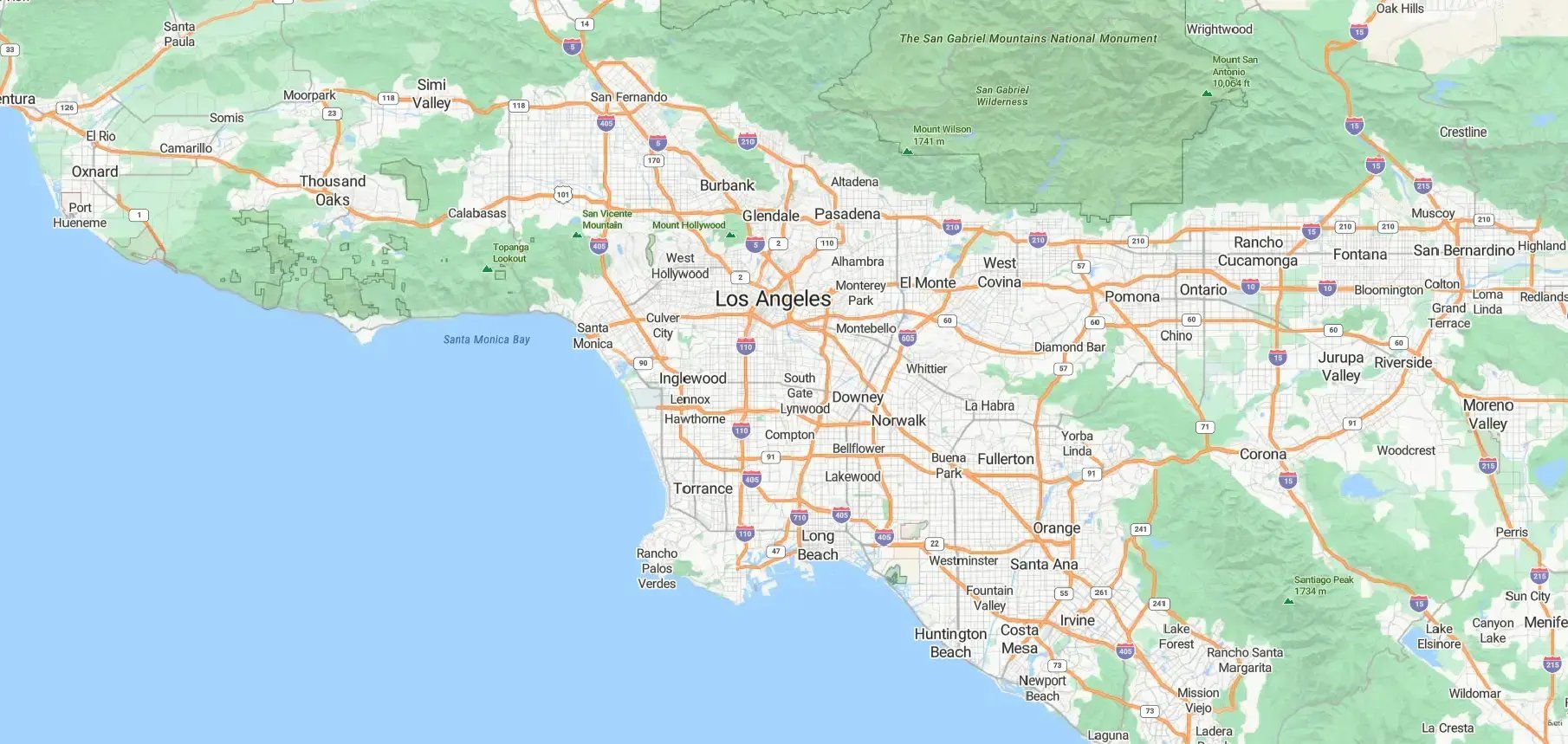
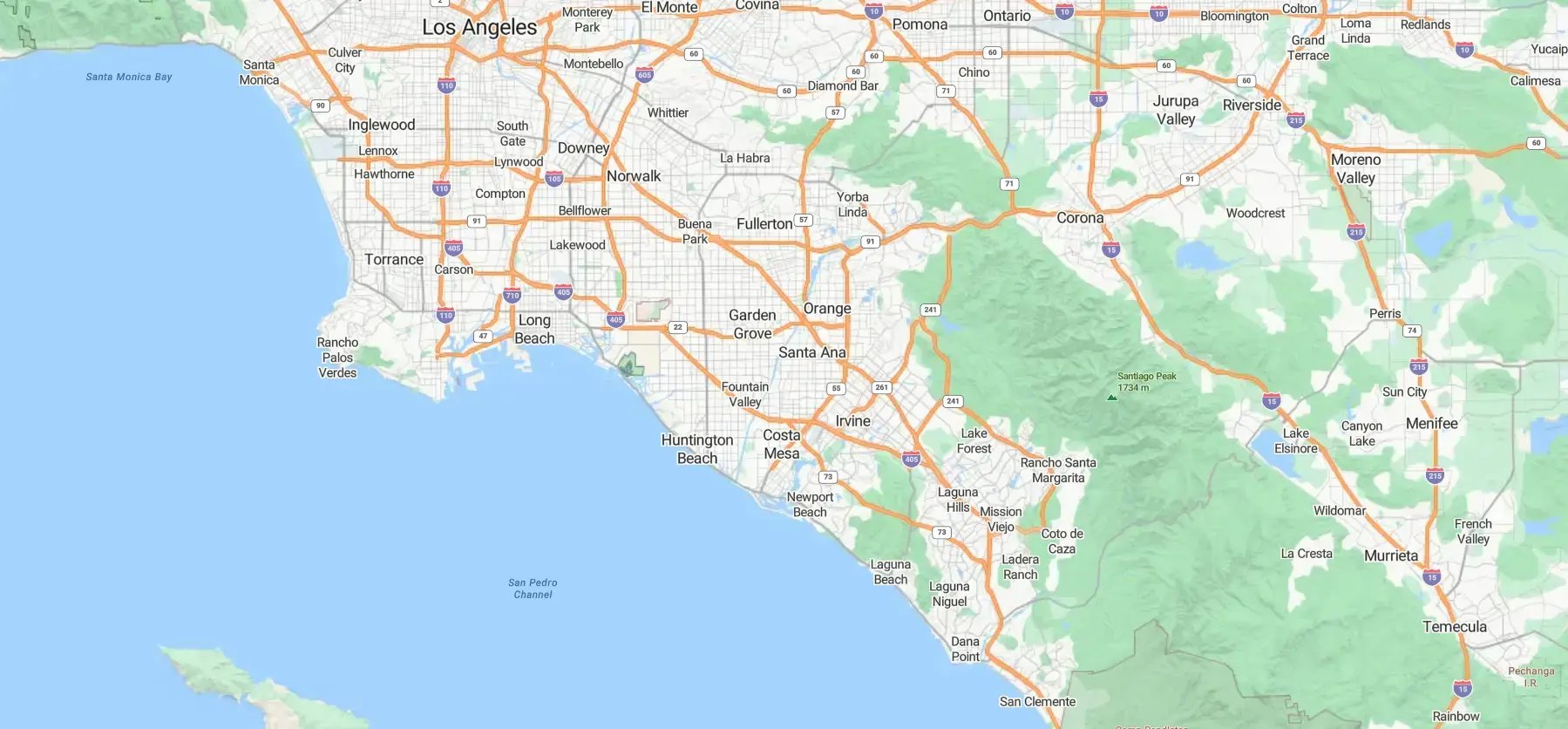
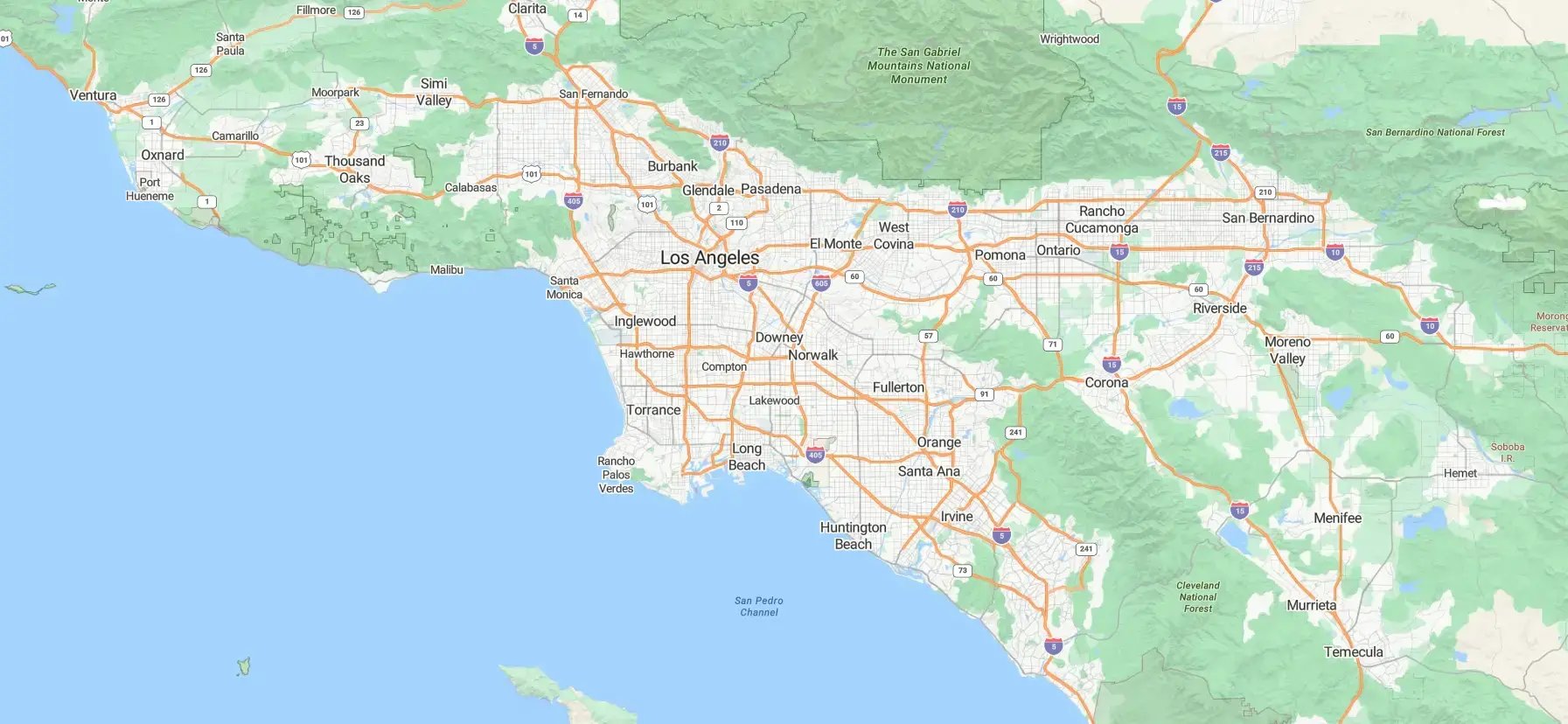
We serve homeowners throughout Los Angeles County and Orange County. The cities below are a few of the areas we cover, not a complete list.
Hybrid Renovations is a residential general contractor serving homeowners across Los Angeles County and Orange County. In Los Angeles County we work in cities including Whittier, Downey, La Mirada, Norwalk, Cerritos, Pico Rivera, Bellflower, El Monte, Hacienda Heights, Glendora, Claremont, West Covina, Long Beach, and Pasadena. In Orange County we serve Anaheim, Santa Ana, Garden Grove, Fullerton, La Habra, Brea, Buena Park, Yorba Linda, Orange, Irvine, Tustin, and Huntington Beach, among others. For larger projects, we also work in nearby Inland Empire areas such as Chino, Chino Hills, Ontario, and Corona. The cities listed are examples, not a complete list.
Long Beach
Pasadena
Glendale
Burbank
Torrance
Whittier
Downey
Norwalk
Lakewood
Cerritos
West Covina
Alhambra
Arcadia
Diamond Bar
La Mirada
Santa Fe Springs
Montebello
Pico Rivera
Culver City
Redondo Beach
+ more
Anaheim
Santa Ana
Irvine
Huntington Beach
Garden Grove
Orange
Fullerton
Costa Mesa
Mission Viejo
Westminster
Newport Beach
Buena Park
Lake Forest
Tustin
Yorba Linda
San Clemente
La Habra
Fountain Valley
Placentia
Brea
+ more
Corona
Norco
Eastvale
Chino
Chino Hills
Ontario
+ more
Residential only. If you're not sure whether you're in range, call us at (562) 903-3955 and ask. It's a thirty-second answer.
FREE ESTIMATE
Get Your Free Estimate
A project manager visits your home, measures, and helps you plan the work around your budget. Free, no-obligation estimates for construction, remodeling, and renovations across Los Angeles and Orange County.
Thanks for reaching out. Our team will be in touch within one business day to schedule your home visit.
TALK TO A PROJECT MANAGERSpeak With a Real Project Manager
Have a project in mind or need to think it through? Talk it over with a dedicated project manager who can answer questions and walk you through your options, with no pressure.
Thanks for reaching out. A project manager will call you back within one business day to talk through your project. No pressure, and no obligation.A project manager will call you to talk through your questions and concerns. No pressure and no obligation.
ASK US ANYTHINGHave a Question? We're Happy to Help.
Ask about your project, our services, timelines, or anything else. A real, local representative will get back to you, with no obligation and no pressure.
Thanks for reaching out. A real, local person will get back to you within one business day with an answer. No obligation.Ask anything, big or small. A real person on our local team will get back to you, with no obligation.
FREE IN-HOME CONSULTATIONBook Your Free Consultation
A project manager comes to your home, measures, and looks at what's actually there before quoting anything. You get a written price before they leave. No obligation, anywhere in Los Angeles or Orange County.
We've got your request. A project manager will reach out within one business day to book your visit.The consultation is free with no obligation. We will call to confirm the details and find a time that works for you.