
Probably, and more often than most roofers will tell you.
If you are replacing half your roof or more, California's Energy Code treats it as an alteration, and cool roof rules can apply. For a normal pitched roof the requirement covers climate zones 4 and 8 through 15. Los Angeles County spans zones 6, 8 and 9. Orange County is mostly 6 and 8. So a large part of both counties sits inside the requirement, not outside it.
Real exceptions exist, and one of them lets you keep the roof color you want. But the widely repeated claim that Southern California pitched roofs are exempt is wrong, and acting on it means ordering the wrong material.
Do you need a cool roof?
A cool roof reflects more sunlight and sheds absorbed heat faster than a standard one. California's Energy Code, Title 24 Part 6, sets minimums for two measurements, and combines them into a third.
Solar reflectance is how much sunlight the surface bounces back. Thermal emittance is how efficiently it releases the heat it does absorb. Solar Reflectance Index combines both into a single number. The code lets you comply either by hitting both individual minimums or by hitting the SRI minimum. Values must be three-year aged, not initial, and must come from a Cool Roof Rating Council rating.
Whether your project triggers any of it starts with one number.
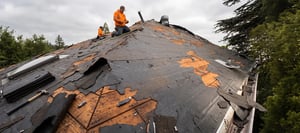
Of the roof area. Replace that much or more and the Energy Code treats the job as an alteration, which is what brings cool roof requirements into play. A genuine patch repair sits below the line. A tear-off is comfortably over it.
After that, three things decide the answer: whether the roof is steep slope or low slope, which climate zone the address sits in, and whether one of the exceptions applies. All three are covered below.
One distinction to get straight before anything else. Fire classification and cool roof rating come from two different codes and are checked separately. A Class A roof is not automatically cool-rated. A cool-rated product is not automatically Class A. In a fire hazard zone you will be satisfying both, with two separate sets of paperwork.
The 10 to 15 myth
This is the part worth reading twice, because it is repeated confidently almost everywhere and it is wrong for the job most homeowners are actually doing.
You will read that cool roof rules apply to steep-slope roofs in climate zones 10 through 15, and that since LA and Orange County sit in zones 6 through 9, a dark shingle is fine here.
That range is real. It is just the wrong code section. It comes from Section 150.1(c)11, which governs new construction. Replacing a roof on an existing house is an alteration under Section 150.2(b)1I, which has its own zone ranges, and they are wider.
| Project and slope | Code section | Zones covered | Aged reflectance | Emittance | Or SRI |
|---|---|---|---|---|---|
| New build, steep slope | 150.1(c)11A | 10 to 15 | 0.20 | 0.75 | 16 |
| New build, low slope | 150.1(c)11B | 13 and 15 | 0.63 | 0.75 | 75 |
| Re-roof, steep slope | 150.2(b)1Ii | 4, and 8 to 15 | 0.20 | 0.75 | 16 |
| Re-roof, low slope | 150.2(b)1Iii | 4, and 6 to 15 | 0.63 | 0.75 | 75 |
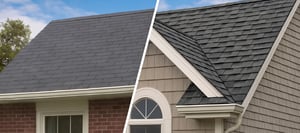
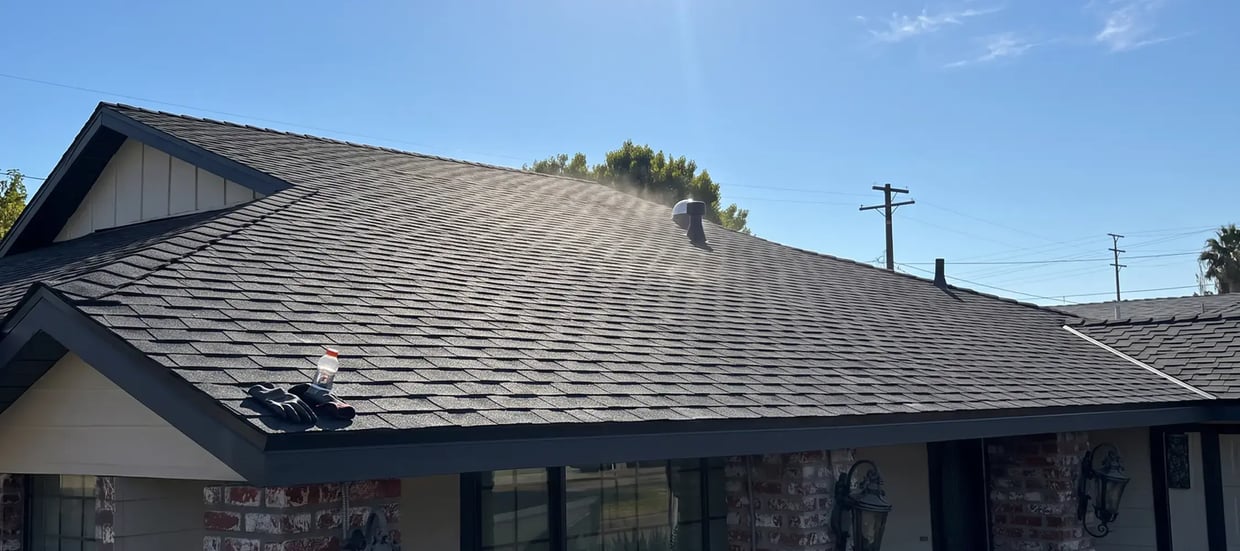
The steep-slope threshold of 0.20 is far less demanding than people assume. It does not mean a white roof. Every major manufacturer sells cool-rated architectural shingles in ordinary greys, browns and blends that clear it comfortably. The white roof stereotype comes from the low-slope rule at 0.63, where a flat roof genuinely does have to be a light or reflective membrane.
In LA & Orange County
Put the counties next to that table. Los Angeles County spans climate zones 6, 8 and 9, with mountain areas in zone 14. Orange County is mostly 6 and 8.
So a steep-slope re-roof in zone 8 or 9 is inside the requirement. That is a very large share of LA County and inland Orange County. Only zone 6, the coastal strip, sits outside it for steep slopes. For low slope it is broader still, since zones 6, 8 and 9 are all covered, meaning essentially every flat re-roof in either county needs a cool product unless an exception applies.
If a contractor tells you Southern California is exempt and orders dark unrated shingles for a zone 8 or 9 address, that is a failed inspection and a material re-order. Someone pays for it.
The numbers to hit
The values must be CRRC-rated and labelled, using three-year aged figures rather than initial ones. This matters more than it sounds.
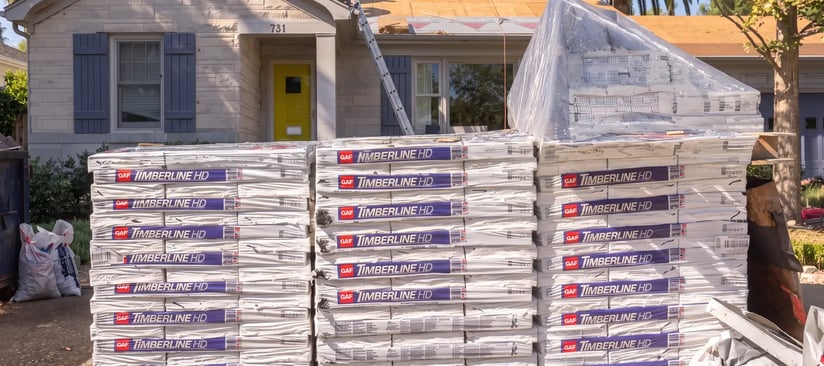
If a product is not in the Cool Roof Rating Council directory, the code assigns it default values, and those defaults will not pass: 0.08 aged reflectance for asphalt shingles, 0.10 for everything else. An unrated product is not a gamble, it is a guaranteed failure. Pull the CRRC certificate before installation and keep a copy on site.
The good news is that every manufacturer we install carries a cool-rated line built for California.
One thing that used to work and does not any more: elevated batten systems and high-profile tiles no longer qualify as energy-efficiency alternatives to the cool roof requirement. If you are quoting a tile roof on an older assumption, check that before ordering.
Three ways to comply
This is the section most articles skip, and it is the one that saves people money and roof color.
For a steep-slope re-roof, the code treats several measures as equivalent to installing a cool product. You are not choosing whether to comply. You are choosing which route.
The full list of equivalents under Exception 1 to Section 150.2(b)1Ii is: a ceiling assembly with a U-factor of 0.025 or lower or at least R-38 ceiling insulation; a radiant barrier in the attic meeting Section 150.1(c)2, where it is not installed directly above spaced sheathing; in climate zones 2, 4, 9, 10, 12 and 14, a building with no ducts in the attic; or R-2 or greater continuous insulation above or below the roof deck. Two further exceptions apply regardless: roof area under building-integrated solar panels, and roof constructions weighing at least 25 pounds per square foot.
Note the third one on that list. If your home is in zone 9 and has no ducts in the attic, you are already exempt, and a lot of LA County homes are in zone 9.
Pro tip from our crews
The radiant barrier route is the one that comes up most on real jobs. If the deck is coming off anyway, radiant barrier sheathing goes on during the re-roof without much added labor, it satisfies the exception, and you keep whatever shingle color you actually wanted. It also does genuine work in an LA attic in August, which is more than can be said for a marginally lighter shingle.
Whichever route you take, it goes on the compliance form. Have it documented at permit time, not after an inspector asks.
For a low-slope re-roof the options are narrower. The reflectance requirement can be met using insulation at the roof deck per the code table, and the solar panel and 25 pound per square foot exceptions apply. There is no radiant barrier alternative for low slope.
Local rules on top
The state code is the floor, not the ceiling. Two jurisdictions here go further, and if you are in either one, the state numbers are not your numbers.
The City of Los Angeles is stricter than the state
LADBS requires steep-slope roofs to use a CRRC-rated product with an aged solar reflectance of 0.25 or higher and thermal emittance of 0.75 or higher. The state minimum is 0.20. A product that satisfies Title 24 everywhere else in California can still fall short inside City limits, and the gap is easy to miss because both numbers look similar on a spec sheet.
Unincorporated Los Angeles County adopted its own enhanced cool roof provisions covering new construction, additions and major roof replacements. Those have carried through several code cycles, so confirm the current version against the county code for your specific roof and zone.
Everywhere else in the two counties, state Title 24 governs unless the local jurisdiction has adopted a reach code of its own. That is a five-minute question at the building department counter and a very expensive one after material is on site.
What it costs
Less than the argument about it is worth, in most cases.
The rebate has a catch worth knowing. LADWP serves the City of Los Angeles. It does not serve most of Los Angeles County and it does not serve Orange County. If your utility is Southern California Edison or a different municipal provider, this particular rebate is not yours. Check your own utility's current program, and confirm amounts directly before budgeting, because rates and funding change between programme years.
Keep the whole thing in perspective. On a compliant job the cool roof is not a line item you can decline. It is a material specification, the same as the fire rating. The real decision is which of the three compliance routes you take, and that is where the radiant barrier and insulation paths can genuinely change both the spec and the price.
Before you order
Climate zones follow California Energy Commission weather station grids, not city or county boundaries. A single city can sit in two zones, and neighborhoods a few miles apart can land on opposite sides of a line. LA County alone contains zones 6, 8, 9 and 14. Do not guess, and do not accept a zone from a sales presentation.
- The climate zone for the address. Use the California Energy Commission climate zone tool, which takes an address or ZIP code. Near a boundary, the building department's determination is the one that governs your permit.
- Steep slope or low slope. The 2:12 line changes both the zone range and the numbers, and a roof with both needs both handled.
- Any local amendment. Ask in the same call whether the jurisdiction has adopted requirements beyond the state minimum. Inside the City of LA, it has.
- Which compliance route you are using, written on the compliance form at permit time rather than settled later.
- The CRRC certificate for the actual product, pulled from the directory and kept on site. An unrated product gets assigned default values that fail.
If you want the material comparison underneath all of this, our guide on 3-tab versus architectural shingles covers which lines carry cool-rated options, and roof replacement permits in LA and Orange County covers where the compliance form fits into the permit. We are a roofing contractor in Los Angeles and Orange County, CSLB #1085596, and we confirm the zone before we order anything.
Frequently asked questions
My roofer says Southern California does not need cool roofs. Is that right?
Not for a re-roof in most of the area. They are probably quoting the zones 10 to 15 range, which is the new construction rule under Section 150.1(c)11. Re-roofs fall under Section 150.2(b)1I, where steep slope covers zones 4 and 8 through 15. Los Angeles County spans zones 6, 8 and 9, so much of it is inside the requirement. Ask them to confirm your climate zone and show you which code section they are relying on.
Does a cool roof have to be white?
No. For a steep-slope roof the threshold is an aged solar reflectance of 0.20, which every major manufacturer meets with cool-rated architectural shingles in ordinary greys, browns and blends. Low slope is a different story: at 0.63, a flat roof effectively has to be a light or reflective membrane. The white roof stereotype comes from the flat roof rule, not the pitched one.
Can I keep the color I want and still comply?
Usually yes, through the radiant barrier route. A qualifying attic radiant barrier under Section 150.1(c)2 is treated as equivalent to installing a cool product on a steep-slope re-roof, so the shingle color becomes your choice again. R-38 ceiling insulation works the same way, as does R-2 continuous insulation above or below the deck. In zones 2, 4, 9, 10, 12 and 14 a home with no ducts in the attic is already exempt.
How much roof do I have to replace before this applies?
Fifty percent or more of the roof area. Below that it is generally treated as a repair rather than an alteration for energy code purposes. A full tear-off is comfortably over the line. If your project sits near 50 percent, confirm with the building department rather than estimating, because the answer changes your material spec.
What happens if the product is not CRRC-rated?
The code assigns default values, and they will not pass: 0.08 aged solar reflectance for asphalt shingles and 0.10 for everything else, against a steep-slope minimum of 0.20. An unrated product is not a risk, it is a certain failure. Check the Cool Roof Rating Council directory before ordering and keep the certificate on site for the inspection.
Is a cool roof the same as a Class A fire rating?
No, and conflating them causes real problems. Fire classification comes from the building code and describes how an assembly performs in a fire. Cool roof values come from the energy code and describe reflectance and heat emission. A Class A roof is not automatically cool-rated, and a cool-rated product is not automatically Class A. In a Very High Fire Hazard Severity Zone you will be satisfying both, from two separate sets of documentation.
Are there rebates for a cool roof here?
LADWP's Consumer Rebate Program includes a cool roof rebate of up to $0.60 per square foot, paid on qualifying product installed over conditioned space. The important limitation is that LADWP serves the City of Los Angeles, not most of LA County and not Orange County. If your utility is Southern California Edison or another provider, check their current program instead. Confirm amounts directly with the utility before budgeting, since rates change between program years.
Did the 2025 code change anything for my house?
For a single-family home, the cool roof values are the same in the 2025 cycle as they were in 2022. The 2025 Energy Code took effect January 1, 2026 and did change the calculation method for SRI, some multifamily prescriptive values, and requirements for liquid-applied roof coatings. Projects with a complete permit application in before the changeover generally stay on the 2022 code.
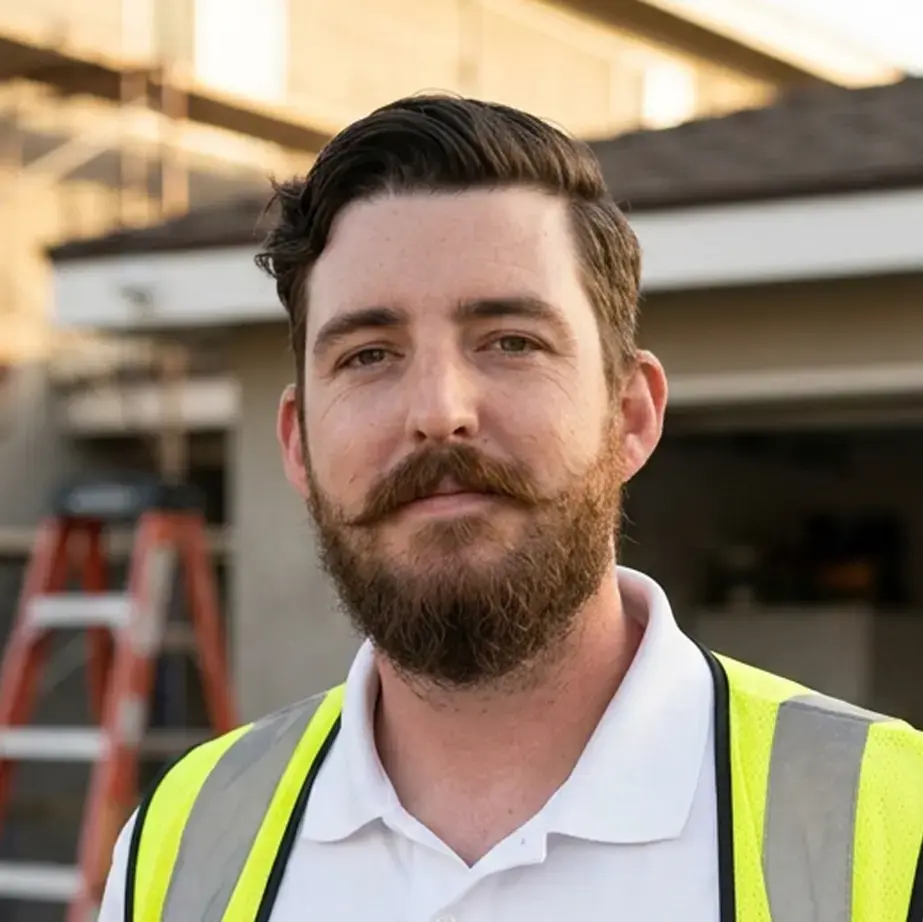
Alex Weis is a licensed roofing and general contractor (CSLB #1085596) with Hybrid Renovations, a residential contractor serving Los Angeles and Orange County for 7+ years. Every guide is written from real jobs and real local numbers.
How to use this: the zone ranges and values above come from the current Energy Code, but climate zone boundaries follow weather station grids rather than city limits, and local jurisdictions can adopt stricter requirements. This guide is general information, not a determination for your address. Confirm your climate zone with the California Energy Commission tool and your local requirements with the building department that has authority over your property, before anyone orders material. Hybrid Renovations is a licensed roofing and general contractor, CSLB #1085596.